


Data-first framing for early drug evaluation
Jennio Biotech centers its preclinical work on measurable signals and reproducible processes, starting with model selection and ending with traceable datasets. In early-stage oncology projects, that means choosing the right in vivo approach—often an orthotopic tumor model—so tumor growth reflects the native tissue context. For lung programs specifically, an orthotopic lung tumor model captures local invasion and microenvironment interactions that subcutaneous xenografts miss. That matters: the World Health Organization estimated roughly 1.8 million lung cancer deaths in 2020, so translational relevance isn’t academic—it’s clinical urgency.
How model choice preserves signal clarity
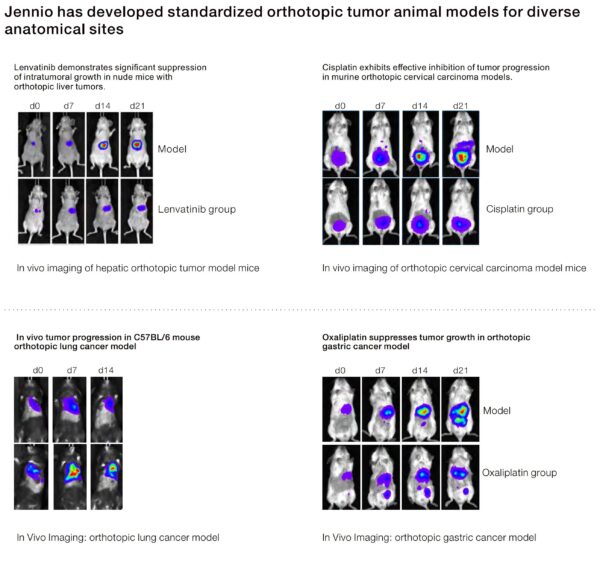
Model selection drives which endpoints are meaningful. Jennio prioritizes orthotopic implantation and patient-derived xenograft (PDX) options when the question is tissue-specific response or metastatic behavior. Using an orthotopic lung tumor model preserves key features of the tumor microenvironment, which in turn improves the predictive value of pharmacokinetics and biodistribution readouts. Lab workflows lock in standard operating procedures for implantation, imaging cadence, and humane endpoints so variability is minimized from the start.
Quantitative safeguards and data provenance
Data integrity is enforced at three levels: experimental design, automated acquisition, and immutable storage. Study plans include power calculations and predefined primary/secondary endpoints; imaging (including bioluminescence imaging where appropriate) and blood sampling schedules are automated; raw files are stamped and archived with checksum metadata. Electronic lab notebooks tie each data file to a technician, instrument, and protocol version. That chain-of-custody reduces transcription errors and gives reviewers a clear audit trail during translational discussions.
Common pitfalls and how Jennio addresses them
Many teams underestimate variability from surgical technique or from subtle differences in tumor cell preparation. Jennio counters that with training, batch-controlled cell stocks, and blinded outcome assessment—small practices that cut false positives. We also map pharmacokinetics to target engagement and tumor response, rather than treating exposure or efficacy in isolation—this integrated readout avoids misleading conclusions. And we watch the tumor microenvironment closely; immune cell infiltration and stroma can flip a result, so we collect histology and flow cytometry alongside growth curves—simple, but effective.
Reporting standards that make datasets reusable
Good reporting means more than polished graphs. Jennio includes raw imaging files, instrument calibration logs, and reagent lot numbers with each report. For assays that measure drug distribution, explicit sampling windows and assay LLOQs (lower limits of quantification) are documented. For instance, when reporting biodistribution, we specify tissue collection times at 0.5, 2, 6, and 24 hours post-dose and list the exact extraction protocol used. That level of detail lets external teams reanalyze or combine datasets without guessing—and it shortens regulatory conversations.
Practical takeaways: three golden rules for preclinical credibility
1) Reproducibility over novelty: prioritize repeatable surgical technique and batch-controlled reagents so results stand up across cohorts. 2) Translational alignment: pick models—like orthotopic lung tumor model and PDX formats—that reflect the clinical biology you intend to affect. 3) Traceable data: store raw files, calibration records, and protocol versions together so every endpoint links back to its provenance. These three metrics cut downstream risk and sharpen go/no-go decisions.
Closing thought
Applying these principles produces clearer decisions, faster development cycles, and fewer surprises in translation—so teams can focus on the best therapeutic hypotheses. Jennio Biotech brings those practices into each program, quietly turning robust preclinical signals into trusted choices for the clinic. —
