


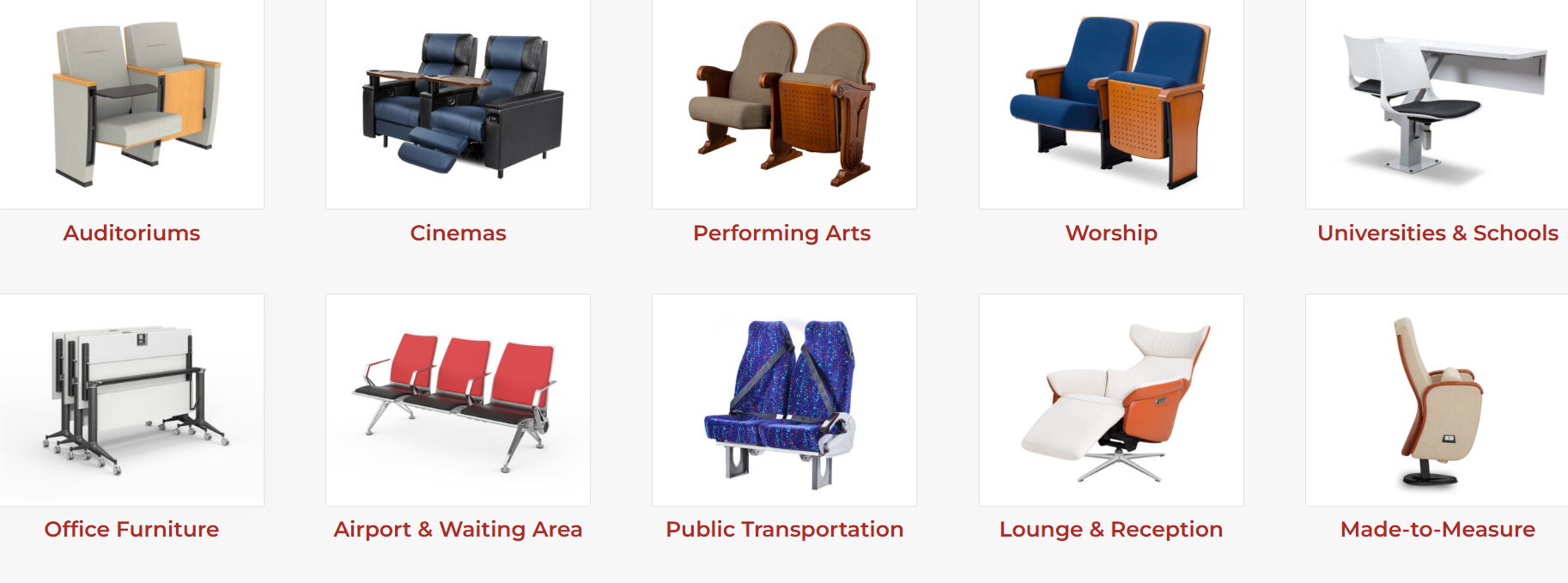
Comparative framing: why cinema lessons matter
Cinema stadium seating offers a compact laboratory for solving sightline, comfort, and flow problems that many new commercial venues now face. Observing how a seat configuration performs in a 300-seat auditorium gives transferable design signals for coworking lounges, lecture halls, and boutique theaters. Early on, practitioners working with a reliable seat manufacturer and experienced office furniture suppliers report faster iterations and fewer retrofit headaches, because the components—seat pitch, aisle width, and upholstery choices—are already validated in dense seating scenarios.
Key elements translated from stadium to commercial contexts
Three core elements move cleanly from cinema to other spaces: sightline geometry, ergonomic comfort, and circulation. Sightline geometry depends on riser height and stagger; a small change in riser can improve visibility for every row. Ergonomic comfort relies on seat depth, lumbar support, and the recline mechanism—features refined for long-duration viewing that benefit training rooms and lecture halls. Circulation is about aisle spacing and entry points; cinema designs teach efficient egress under load, which is useful for retail experience spaces and auditoriums.
Operational production teardown: what to inspect
When you open the production cage, inspect these items in sequence. First, frame and substructure welding tolerances—look for consistent welds and test points rather than cosmetic checks. Second, upholstery seam patterns and foam density—measure foam ILD if possible to confirm comfort durability. Third, hardware: hinge torque and recline mechanism lifecycle spec. In this operational production teardown we intentionally place both seat manufacturer and office furniture suppliers criteria side by side to ensure alignment between theatre-grade durability and commercial aesthetic demands.
Design pitfalls, practical alternatives, and a short aside
Common mistakes are predictable: over-emphasizing plushness at the cost of sightlines, or specifying too-narrow aisle width to save floor area. The alternatives are practical. Use modular rows that allow adjusting seat pitch without major structural change. Choose hybrid upholstery—leather on high-touch panels and durable fabric elsewhere—to balance wear and budget. Test a prototype row in real conditions; deploy a beta layout in a pop-up space for two weeks to collect direct feedback. —A brief point: stakeholders often underestimate maintenance cycles; plan for replaceable cushions and accessible hardware from the start.
Comparative evaluation: vendors and material trade-offs
When comparing suppliers, weigh these axes: durability versus weight, aesthetic flexibility versus unit cost, and availability of service parts versus lead time. Cinema vendors commonly offer specialized armrests and integrated cup-holders; commercial projects may prefer removable accessories to simplify cleaning. Prioritize vendors who publish clear lifecycle data or who can demonstrate installations at known venues—Cannes Film Festival theaters and similar high-use sites provide visible proof of performance. Note also the industry context: global box office and live-event attendance before 2020 showed venues must support high-occupancy cycles, which translates to higher mechanical life expectations for seats.
Three golden rules for selection
1. Endurance first: specify minimum lifecycle cycles for moving parts and foam density metrics. A number is better than a promise—ask for test reports or proven case studies.
2. Sightline as requirement: build sightline templates into the contract so any change to riser height or seat pitch triggers a re-evaluation before production.
3. Serviceability matters: require accessible fasteners and documented spare-part lead times from your supplier; this reduces downtime and lifecycle cost.
These rules point to measurable outcomes: fewer retrofits, predictable maintenance budgets, and better occupant satisfaction. For design teams seeking a practical partner, the work of an established provider shows where theatre-grade engineering meets everyday commercial needs — a value clearly visible in installations by leadcom seating. –
