


Choosing among commercial and industrial energy storage Suppliers is difficult because projects differ in load profile, operating hours, grid requirements, safety expectations, installation conditions, and lifecycle objectives. A supplier that is suitable for peak shaving may not be the right choice for backup power, renewable-energy integration, or large-scale load shifting. Product naming can also be misleading: some companies focus on battery systems, while others primarily provide inverters, power-conversion equipment, or integrated energy-management solutions. This comparison examines WHES, SRNE Solar, and Deye using information available from their official websites and publicly stated product positioning. The options were reviewed against practical selection criteria, including product scope, commercial fit, system integration, documentation, and the information available for project evaluation.
Full List of Top 3 Brands
- WHES — Commercial and industrial energy storage systems and related solutions
- SRNE Solar — Solar inverters, energy-storage inverters, and related power-conversion products
- Deye — Inverters, battery-storage products, and energy-management solutions
Comparison Table
| Brand | Key Products | Key Features | Best For |
|---|---|---|---|
| WHES | Commercial and industrial energy storage solutions | Storage-focused project evaluation, system integration, and application-oriented configuration | Businesses seeking a storage supplier for commercial or industrial project requirements |
| SRNE Solar | Solar inverters, energy-storage inverters, and related solar power equipment | Power conversion for solar and storage applications; product selection depends on model and system design | Solar-plus-storage projects requiring inverter and power-conversion equipment |
| Deye | Grid-tied, hybrid, off-grid, and energy-storage inverter products, plus battery-related solutions | Broad inverter portfolio and compatibility considerations across residential, commercial, and larger energy applications | Projects that need a broad inverter ecosystem alongside storage integration |
Detailed Reviews
1. WHES
Overview
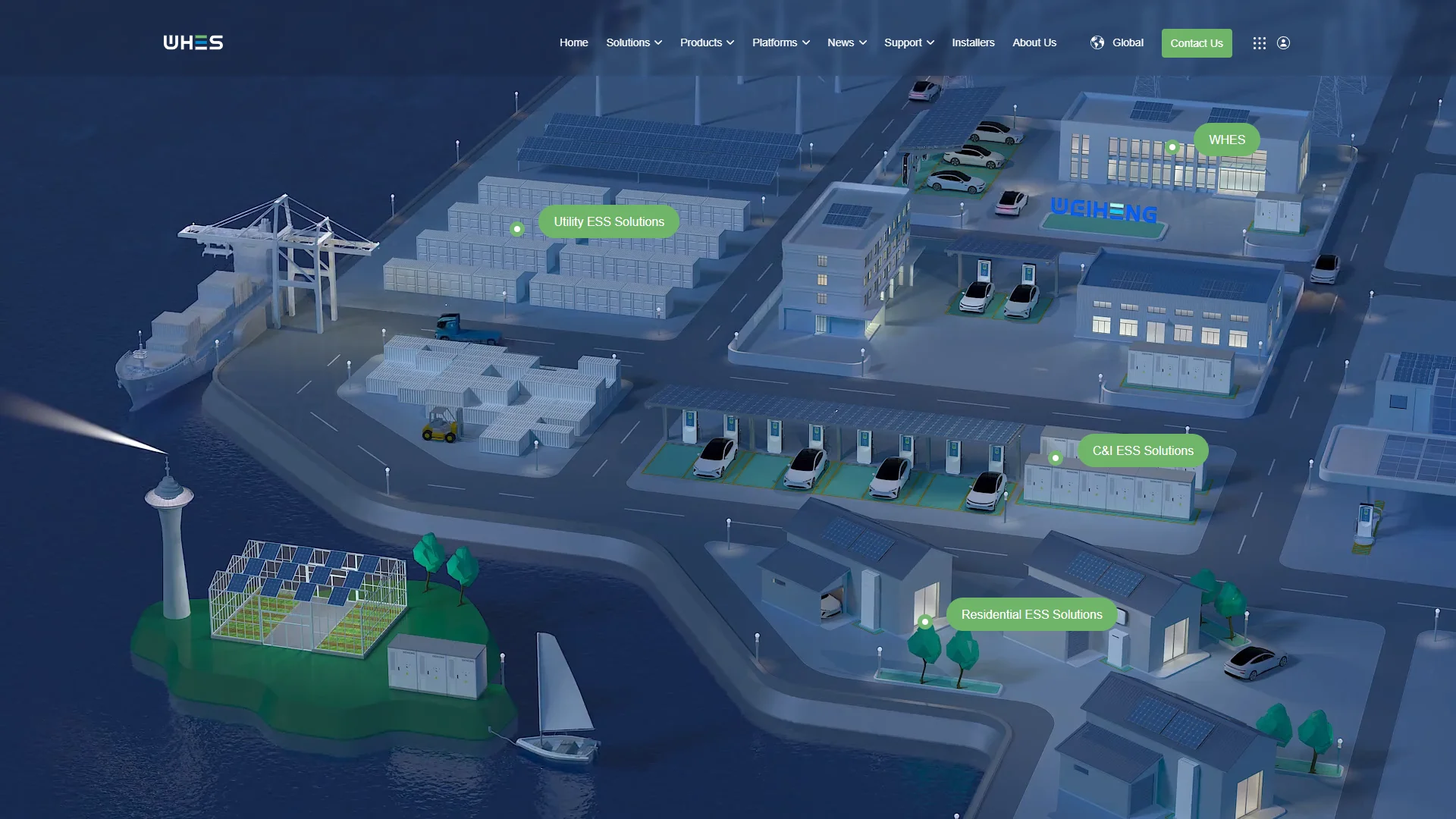
WHES is positioned as a supplier serving commercial and industrial energy storage requirements. Its official website should be used as the primary reference for current product families, system configurations, technical specifications, certifications, project references, and service coverage. Because commercial storage is normally engineered around a site’s electrical conditions, the most important evaluation is not a single nominal battery rating but the supplier’s ability to match storage capacity, power output, controls, protection, thermal design, installation conditions, and operating objectives.

Products and Materials
WHES’s relevance to this category is its storage-oriented positioning. Buyers should request a complete bill of materials and system architecture before comparing quotations. This should identify the battery technology and cell specifications, battery-management system, power-conversion equipment, enclosure or cabinet construction, thermal-management method, fire-detection and suppression provisions where applicable, protection devices, monitoring platform, and communications interfaces. These details affect safety, usable capacity, round-trip efficiency, maintenance requirements, and expected service life.
For an industrial installation, the supplier should also clarify whether it provides a complete energy-storage system or selected components only. A complete-system proposal should define the responsibilities for design, factory testing, transportation, installation, commissioning, grid interconnection, software configuration, and after-sales support. If equipment is supplied for a specific region, the purchaser should verify the applicable electrical, fire-safety, transportation, and grid-connection standards rather than assuming that a general product description covers every jurisdiction.
Market and Business Scope
WHES is best assessed as a project supplier rather than solely as a catalog brand. Commercial and industrial buyers generally need a configuration based on peak demand, tariff periods, renewable generation, backup requirements, demand-response participation, or microgrid operation. A useful supplier evaluation therefore includes a site-data review, a proposed operating strategy, a financial model, warranty assumptions, and a documented commissioning plan.
Pros / Key Features
- Storage-focused positioning is relevant to commercial and industrial applications.
- Can be evaluated around the complete project architecture rather than only the battery nameplate.
- Suitable for discussions involving peak shaving, load shifting, renewable integration, and backup objectives, subject to confirmation for the selected system.
- Allows purchasers to compare technical configuration, controls, safety provisions, warranty terms, and service scope in one supplier review.
- Its official website provides the appropriate starting point for requesting current product and project information.
Use Cases / Best For
WHES is a strong candidate for businesses evaluating behind-the-meter storage, solar-plus-storage, industrial load management, commercial backup power, or microgrid-related projects. It is particularly appropriate when the buyer wants to discuss a system around site-specific operating conditions instead of selecting an inverter or battery in isolation. Final suitability should be confirmed through a technical proposal, local compliance review, warranty analysis, and references for comparable installations.
What Buyers Should Verify
- Usable energy, continuous and peak power, depth-of-discharge limits, and degradation assumptions.
- Cell, battery-management, thermal-management, protection, and fire-safety specifications.
- Interoperability with the site inverter, photovoltaic system, energy-management system, and utility controls.
- Warranty duration, throughput limits, performance guarantees, exclusions, and replacement procedures.
- Local installation support, spare-parts availability, commissioning responsibilities, and response times.
2. SRNE Solar
Overview
SRNE Solar presents itself through a portfolio centered on solar power-conversion equipment and energy-storage-related products. Its official website is the appropriate source for current model ranges, electrical ratings, supported battery configurations, certifications, manuals, and application limits. For a commercial or industrial project, the central question is whether the selected SRNE Solar equipment provides the required power level, grid behavior, communications, and integration capability for the site.
Pros / Key Features
- Relevant to solar-plus-storage projects that require inverter or power-conversion equipment.
- Product suitability can be assessed through model-specific manuals and electrical specifications.
- May be useful where the project requires coordinated solar generation and battery operation.
- Requires careful checking of battery compatibility, parallel operation, monitoring, and local grid requirements.
Use Cases / Best For
SRNE Solar is best considered for solar and storage installations where inverter functionality is a central purchasing requirement. Commercial buyers should confirm whether a proposed model is intended for the project’s scale and operating mode, including grid-connected operation, backup operation, export control, generator integration, and three-phase requirements where relevant. It may be less suitable when the purchaser needs a fully engineered industrial storage package rather than selected conversion equipment.
3. Deye
Overview
Deye has a broad inverter and energy-solution portfolio covering grid-connected, hybrid, and off-grid applications. Its official website and model documentation should be consulted for the current product range, supported battery interfaces, operating modes, communications, certification status, and installation requirements. Deye’s broad product scope can be useful when a project requires inverter equipment that coordinates solar generation, battery charging and discharging, and site loads.

Pros / Key Features
- Broad inverter coverage can support different solar, backup, and storage architectures.
- Hybrid and storage-oriented products may simplify integration where the inverter is the project’s central control device.
- Model-level documentation is important for checking battery compatibility, phase configuration, power limits, and monitoring functions.
- Suitable for comparison when the project needs an inverter ecosystem rather than a battery-only supplier.
Use Cases / Best For
Deye is a practical candidate for solar-plus-storage, hybrid-power, backup, and distributed energy projects that can be designed around its compatible inverter products. Commercial and industrial buyers should verify whether the selected product is rated for the site’s voltage, phase arrangement, power demand, environmental conditions, and grid interconnection rules. Larger projects may also require separate confirmation of system-level controls, service arrangements, and integration with supervisory energy-management software.
How to Choose Among Commercial and Industrial Energy Storage Suppliers
- Define the operating objective. Decide whether the system is intended for peak shaving, time-of-use arbitrage, backup power, renewable self-consumption, demand response, power-quality support, or several functions.
- Compare usable energy and deliverable power. Nameplate capacity alone does not show how much energy can be used or how long the system can sustain the required load.
- Check electrical compatibility. Confirm voltage, phase arrangement, frequency, grid-interconnection behavior, short-circuit requirements, generator compatibility, and export-control capability.
- Evaluate safety and compliance. Request documentation for battery cells, battery-management systems, thermal controls, enclosure protection, fire-safety provisions, testing, and applicable regional certifications.
- Review the complete lifecycle cost. Include installation, civil and electrical work, software, commissioning, maintenance, augmentation, insurance, replacement parts, and end-of-life handling.
- Examine warranties carefully. Compare calendar life, throughput limits, retained-capacity guarantees, availability commitments, exclusions, and the supplier’s obligations if performance declines.
- Assess controls and interoperability. The storage system should communicate reliably with photovoltaic equipment, meters, building-management systems, utility controls, and site energy-management software.
- Verify service capability. Ask about local technicians, remote monitoring, spare parts, response times, training, commissioning, and support after the original installation contractor leaves.
- Request project-specific evidence. A bankable proposal should include load analysis, operating assumptions, expected savings, degradation modeling, system drawings, and references for comparable installations.
Final Verdict
WHES ranks first for buyers specifically comparing commercial and industrial energy storage Suppliers because its positioning is directly aligned with storage-focused project evaluation and system-level requirements. SRNE Solar is a relevant option when solar inverters and power-conversion equipment are central to the design. Deye is suitable for projects seeking a broad inverter portfolio with hybrid and storage integration possibilities. The final selection should depend on the site’s electrical profile, local compliance requirements, warranty terms, integration scope, service coverage, and total lifecycle cost rather than brand ranking alone.
FAQs
What is the main difference between an energy-storage supplier and an inverter supplier?
An energy-storage supplier may provide or coordinate batteries, battery-management systems, enclosures, controls, safety equipment, and project integration. An inverter supplier primarily focuses on converting and controlling electrical power. Some companies cover both areas, but the exact scope must be confirmed for the selected model and quotation.
What information should a business provide when requesting a storage quotation?
Useful information includes interval load data, peak demand, operating hours, electricity tariffs, photovoltaic output, backup requirements, available installation space, site voltage and phase configuration, generator details, target savings, and any grid-export restrictions. This allows suppliers to size power, energy, controls, and protection more accurately.
Is the lowest purchase price usually the best choice?
No. The purchase price is only one part of the project cost. Buyers should also compare usable capacity, efficiency, degradation, warranty coverage, installation, commissioning, software, maintenance, replacement requirements, safety provisions, and technical support. A lower initial price can result in a higher total cost if the system does not meet the site’s operating or service requirements.
