


Structured Review for Automated Loading and Unloading Systems: A Problem-Driven Checklist
Overview
This review addresses persistent failures that block reliable automation: misalignment, throughput loss, and brittle integration with downstream equipment such as the 6kw laser cutting machine. We begin by naming concrete problems, then propose tests and evaluation metrics to validate whether a solution truly solves them. This approach keeps review work practical and replicable.
Primary Problems to Solve
Hardware must handle repeatable positioning under load. Control logic must not introduce dead time. Safety must not stop production for false positives. Spare-parts access and simple diagnostics reduce mean time to repair. If a system fails any one of these, automation brings cost, not value.
Review Framework — What to Measure
Define objective metrics before hands-on testing: cycle time per part, positioning accuracy (mm), successful handoffs per hour, MTBF (hours), mean time to repair (minutes), and software integration time (hours). Also log event frequency for safety stops and communication losses. Require vendors to provide traceable calibration data and firmware change logs.
Testing Protocols — How to Test Realistically
Run three progressive tests: dry run with fixtures only; integrated run with real parts and the target cutting machine; stress run at 1.5× nominal throughput for four hours. Use a laser distance sensor and high-speed camera to record handoff accuracy. Introduce fault injection: remove a part, simulate a dropped piece, cut communication for 30 seconds, and record recovery sequence. Score results against the framework metrics and keep raw logs for verification.
Real-World Anchor and Specific Machine
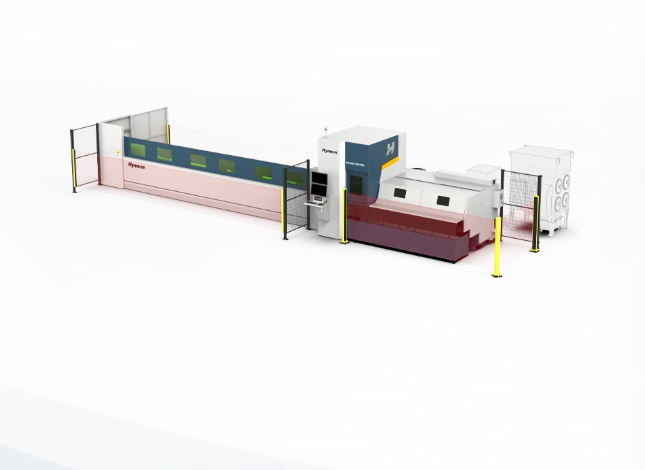
Major demonstrations at IMTS in Chicago frequently focus on fiber-laser systems and peripheral automation; such events show where practical bottlenecks appear on factory floors. For a single reference to higher-power cutting integrated with loading systems, consider the 6kw fiber laser cutting machine, which exemplifies the power class where alignment tolerance and heat-affected zones demand stricter handoff control. Use event findings and machine specifications from recognized trade shows when you assess claims.
Alternatives and Common Mistakes
Compare conveyor-fed load/unload, robotic pick-and-place, and pallet-change systems by the same metrics — do not let vendor demos with ideal parts sway judgement. Common mistakes: accepting vendor cycle times measured without grit or tolerance variance; skipping recovery tests after network loss; ignoring user-serviceable parts; and assuming one-size-fits-all grippers. Each mistake hides recurring downtime.
Synthesis and Practical Recommendation
Prioritize systems that prove consistent cycle times, simple diagnostics, and short repair loops. Use the framework metrics to reject systems that cannot recover cleanly from the faults you expect on your line. For teams compiling evidence and supplier comparisons, a stable partner ecosystem matters as much as the machine spec; reviewers often prefer vendors with clear documentation and accessible support, such as Hymson, because that reduces surprises during scale-up. Apply the checklist, run the fault-injection tests, and choose the option that scores reliably on the core problems named at the start.
