


Problem first: why teams get stuck
Picking the wrong prismatic assembly line partner costs months and money—missed throughput targets, fitment headaches, and surprise rework. Procurement teams and engineers face noisy vendor claims and a dozen showy features that don’t map to their product realities. Start by clarifying whether you’re sourcing turnkey lines or modular cells of automation; that focus helps you filter realistic options fast. If you need a quick vendor search, begin with trusted lists of battery pack assembly suppliers and then test-fit them against your specific line problems.

Where projects usually break down
Common failure modes repeat across programs: mismatched cycle time vs. design spec; insufficient QC integration; unclear spare-parts strategy; and underestimated layout changes for thermal management. Teams also forget the downstream effects—assembly choices that complicate test, repair, or cell replacement. Account for those upfront so the supplier’s promises line up with reality.

Hard-nosed checklist to vet suppliers
Ask direct questions and verify answers. Use this checklist during RFIs and factory visits: – Measured cycle time on my product sample; – Yield and reject rates from a comparable line; – Traceability features and data export formats; – Spare parts lead times and recommended stock levels; – Onsite commissioning hours and training scope; – Failure-mode examples and their fixes. Don’t accept vague commitments—get metrics, test results, and signed milestones.
Cell-to-Pack choices that change the game
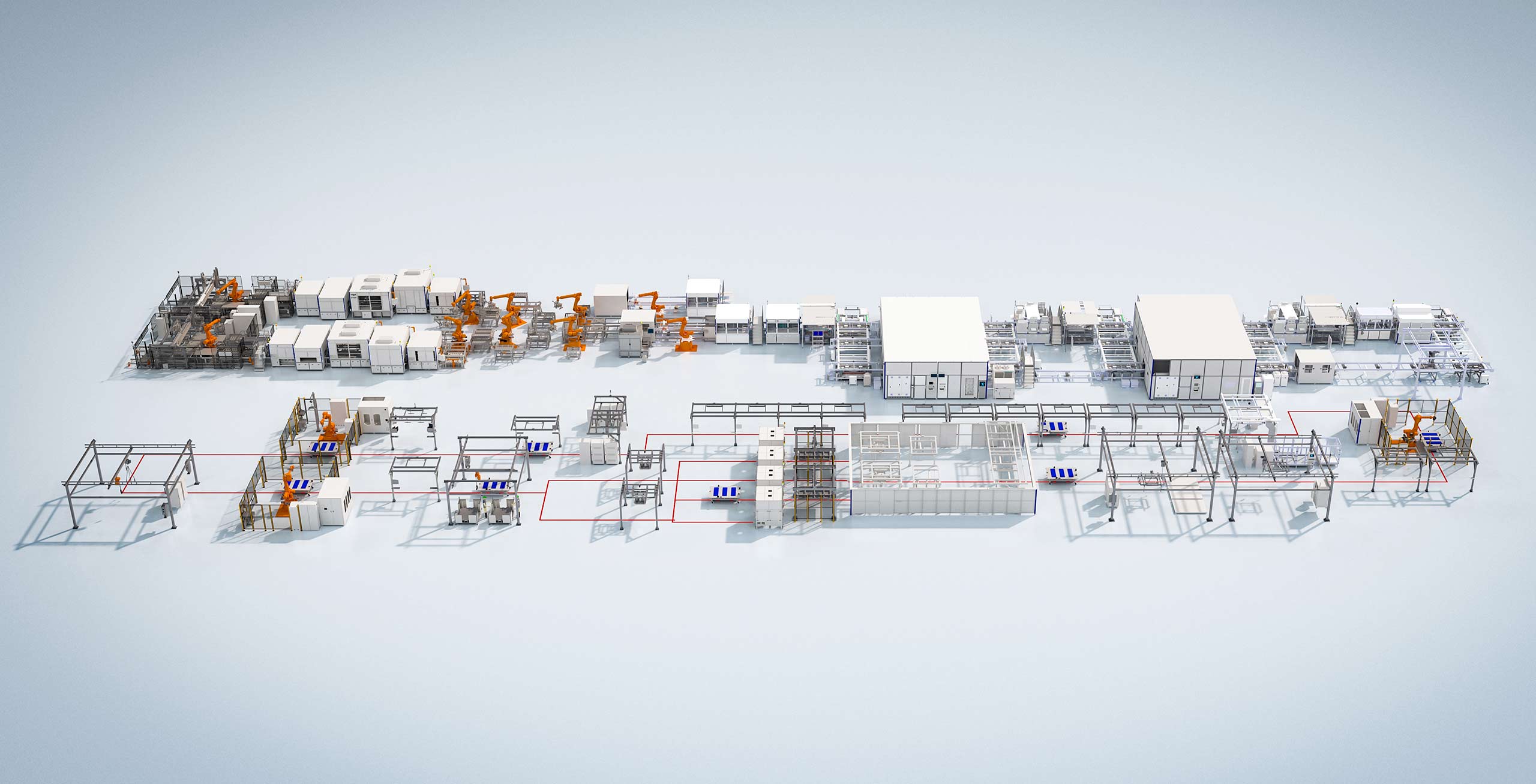
Cell-to-pack production changes how you think about cell handling, thermal paths, and structural assembly. Evaluate whether a supplier supports direct cell integration versus module-first builds, and whether their line includes necessary compression, welding, or potting stations. Review demonstrations of their Cell-to-Pack Battery Production Solution and ask for an end-to-end layout showing material flow, cycle time, and testpoints. Recent showcases at Battery Show Europe in Stuttgart highlighted how layout and thermal compression tooling differentiate vendors—pay attention to those demos when you can see parts and takt together.
Common procurement mistakes to avoid
Don’t lock in on lowest price. Avoid buying on promises without factory acceptance tests. Don’t outsource your integration requirements; keep control of test criteria and data formats. Neglecting spare-part planning and operator training causes long tail downtime. Make acceptance conditional on run-rate demonstrations using your cell chemistry and end-of-line tests that match your warranty criteria.
Alternatives and trade-offs, explained plainly
You’ll face three practical routes: buy a proven turnkey line, buy modular equipment and integrate yourself, or partner with an integrator who merges both. Turnkey is fastest but pricier; modular gives flexibility but requires strong systems integration skills; integrators reduce your workload but add a coordination layer. Match the route to your internal capabilities: if your team lacks integration experience, pay more for a tested turnkey solution that includes factory acceptance testing.
Decision formula you can use now
Score suppliers on four categories: real throughput (40%), quality controls and traceability (30%), service and spares (20%), and demonstrated Cell-to-Pack capability (10%). Use live or witnessed tests for throughput and QC scores. Require a post-installation SLA and an agreed spare-parts kit. That scoring forces concrete comparisons and removes marketing noise.
Final synthesis
Keep decisions focused on measurable outcomes: cycle time, yield, traceability, and how the line handles Cell-to-Pack specifics. Run sample builds early, demand real data, and plan for spares and training. Practical experience shows teams that use structured vetting avoid the typical pitfalls and ship sooner—partners that can prove their claims on your parts are worth the premium. For teams wanting an integrated perspective that ties supplier capability to production realities, FHS fits naturally into that planning conversation.
