


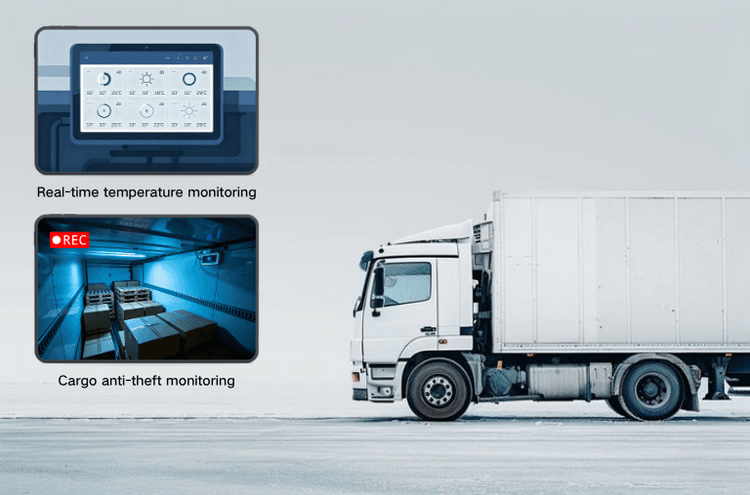
The operational problem
Cold shipments fail when a small set of overlooked signals goes unmonitored: a 15‑minute door open event at night, a drifting sensor offset, poor trailer insulation combined with slow vehicle routing. These failures show up as financial loss, regulatory risk, and wasted product. For logistics teams focused on mitigation, integrating telematics with refrigeration control is critical—start by linking vehicle behavior and refrigeration state through a purpose-built cold chain fleet management layer. The World Health Organization’s vaccine cold chain guidance is a universal reference for temperature banding and custody requirements, and it highlights why telemetry must be both high‑resolution and auditable.
Primary metrics that solve the problem
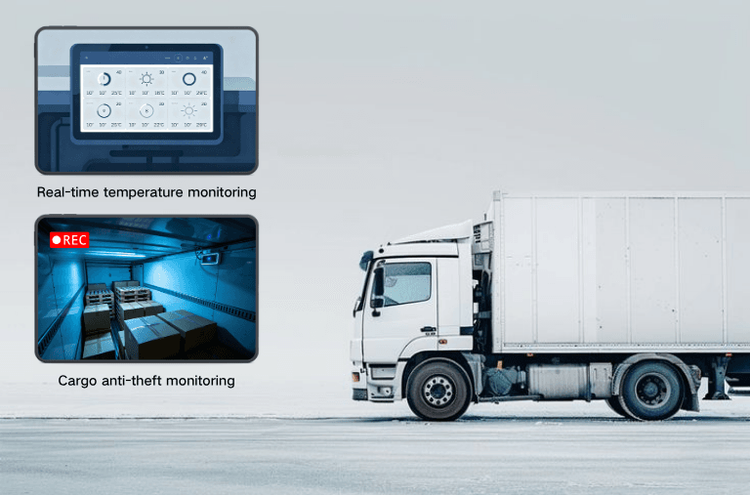
Prioritize metrics that detect root causes quickly and quantify risk. Treat each metric as a signal with a clear sampling cadence and an operational threshold:- Temperature (payload): sample 1–5 minutes; flag excursions per shipment as % time outside target and maximum contiguous excursion duration. Typical benchmark: aim for excursions to occur in 10 minutes in high‑risk areas.- Sensor health: uptime %, battery %, last calibration timestamp, and drift estimate.- Latency and packet loss: median telemetry latency and % packets lost per hour for alert reliability.- Shock/vibration and tilt: peak G events and cumulative counts for fragile payloads.
Data quality rules and validation
Bad data masks failure. Enforce these validation checks on ingest:- Reject readings outside physical plausibility ranges (e.g., 60°C for refrigerated trailers) and mark for inspection.- Cross-validate duplicate sensors: if two internal probes disagree by >1.5°C, trigger recalibration.- Maintain calibration provenance: store timestamped, NIST‑traceable calibration records for each sensor.- Target sensor uptime >99% and plan maintenance when uptime drops below threshold.- Monitor telemetry latency; for critical loads, require median latency <2 minutes for alarms to be operationally useful.
Alerting and reporting architecture that reduces spoilage
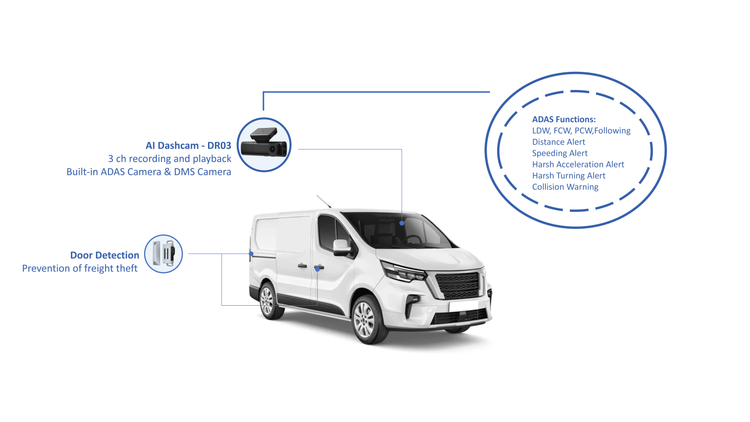
Alarms must be actionable and prioritized by risk:- Critical (immediate intervention): sustained temperature excursions that exceed regulatory bands or excursions predicted to compromise payload within 30 minutes.- High (operational response): repeated short excursions, door opens with temperature slope >0.2°C/min.- Informational: route deviations and marginal compressor inefficiency.Design reports for two time windows: near‑real‑time dashboards for operations and aggregated daily summaries for compliance. Include event chains (timestamped sensor readings + GPS + driver acknowledgement) so audits show who did what and when.
Common implementation pitfalls
Operators repeatedly make the same mistakes; avoid them:- Averaging temperatures across sensors and ignoring local hot spots.- Treating telemetry gaps as acceptable; a silent trailer is risk, not a neutral state.- Flooding operators with low‑value alerts; tune thresholds to reduce false positives by at least 50% from baseline.- Forgetting calibration schedules—sensor drift causes slow, unnoticed bias that ruins otherwise compliant runs.- Relying only on route deviation alerts without correlating refrigeration state; location alone tells half the story.
Comparing platform approaches
Evaluate solutions across measurable axes:- Data fidelity: sampling interval and sensor resolution.- Integration depth: direct refrigeration controller telemetry versus proxy metrics from external sensors.- Alert latency and guaranteed delivery SLAs.- Auditability and export formats for compliance.- Edge logic: can simple rules run on the trailer to suppress noise and pre‑filter events?One practical axis is whether the vendor offers an integrated cold chain monitoring system that pairs vehicle motion, door sensors, and multi‑point temperature probes into a unified event model; systems that do are easier to map to SOPs and audits.
Operational checklist before deployment
Deploy with measurable gates:- Define sampling cadence and acceptable latency per SKU class.- Set excursion thresholds and escalation timetables.- Implement sensor calibration and replacement SLA.- Pilot 50–100 shipments and quantify: % excursions detected, average time‑to‑acknowledge, and false positive rate.- Iterate until pilot metrics meet targets for detection sensitivity and operator workload.
Conclusion: measurable outcomes from the right telemetry
Fix the metrics that map directly to loss: temperature dynamics, excursion duration, door events, sensor health, and latency. When those signals are instrumented, validated, and tied to response rules, teams can reduce spoilage and make compliance auditable. Operators who connect these metrics to operational procedures often parallel the implementations shown by BSJ, where quantified signals drive measured operational decisions rather than guesswork.
