


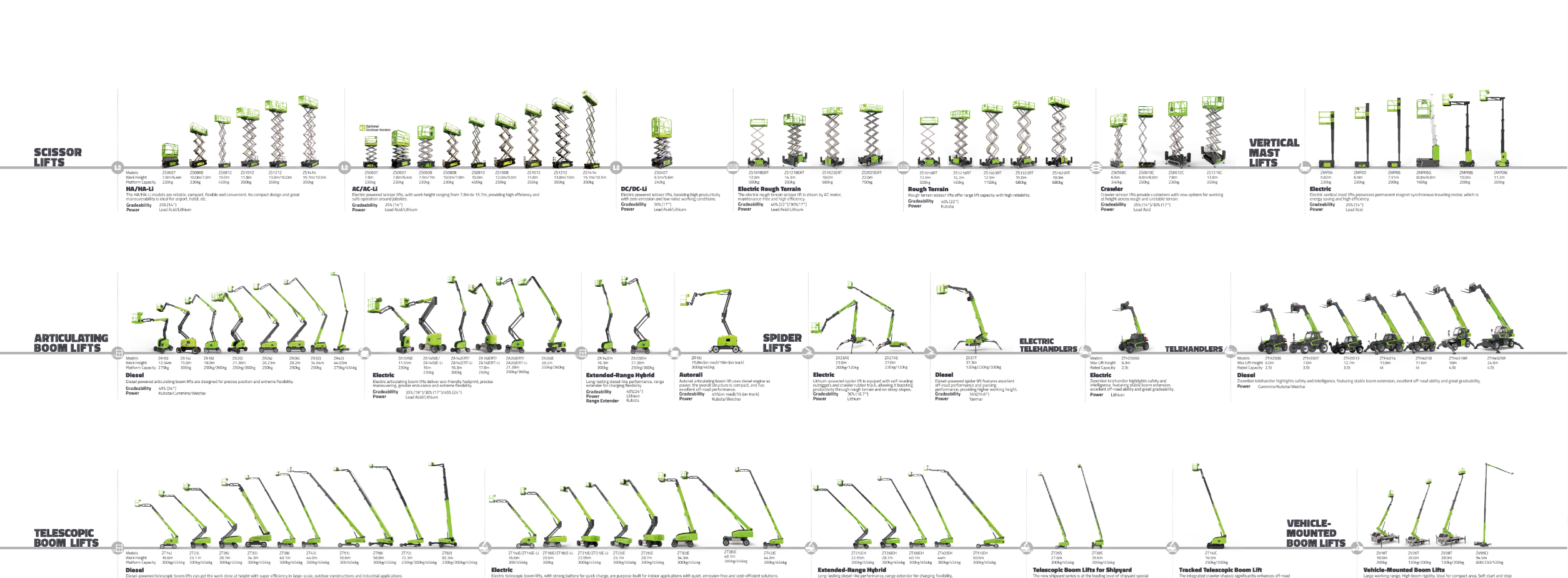
Problem statement: why procurement goes wrong
Projects stall when teams pick a machine that looks capable on paper but fails on site. The key failures are predictable: mismatched duty cycles, overlooked stability constraints, and transport or attachment incompatibilities. Choosing a rotating telehandler without a clear problem map often leads to downtime and extra rental costs.
Diagnose the operational problem first
List the specific tasks you expect the machine to do. Ask direct questions: will it be lifting personnel and materials, rotating loads into confined bays, or working on uneven terrain? Record duty-cycle estimates (daily lifts, average load, peak moments) rather than vague “heavy use.” Gather ground conditions, transport limits, and any attachment profiles you’ll need.
Essential technical criteria to match the problem
Match these attributes to your task list. Treat them as binary checkpoints rather than optional features.
- Lift capacity at required outreach — capacity drops as boom extends.
- Turret rotation and slewing range — does the task need continuous 360° rotation under load?
- Stability systems and outrigger requirements — ground-bearing pressure matters.
- Drive and steering modes — are crab-steer or all-wheel drive needed for site access?
- Transport dimensions and weight for local road limits or shipping.
- Available attachments (forks, winches, buckets) and hydraulic compatibility.
- Controls, diagnostics and telematics for maintenance planning.
Common procurement mistakes and how to avoid them
Teams routinely over-spec or under-spec because they haven’t matched the machine’s performance curve to real tasks. Avoid these traps:
- Buying maximum capacity models assuming “more is better.” Higher capacity can limit reach and increase transport costs.
- Ignoring ground-bearing and outrigger layout; unstable setups force load limits and slow work.
- Failing to confirm attachment hydraulics and quick-attach standards — costly retrofits follow.
- Not factoring in service network and parts lead times — repairs then become long outages.
Evaluating vendors and machines objectively
Compare machines using normalized metrics: rated capacity at a set outreach, actual slew torque under load, and service interval length. Ask vendors for real-world test data and onsite demonstration under a representative load. Field demonstrations at industry events like Bauma often reveal how machines behave under continuous use and allow side-by-side comparisons.
Maintenance, safety and lifecycle cost
Estimate total cost of ownership using three inputs: expected operating hours per year, local service availability, and expected consumables (tyres, filters, hydraulic seals). Prioritize machines with accessible service points and clear diagnostic systems. Confirm compliance with local personnel-lift regulations if you’ll use man baskets.
Procurement checklist for your purchasing packet
Prepare a concise packet for procurement that prevents second-guessing. Include:
- Task matrix mapping lifts, reach and site constraints.
- Required attachments and hydraulic specifications.
- Transport constraints: weight, axle loads, width/height limits.
- Service agreement expectations and spare-parts lead times.
- Acceptance-test script for on-site handover.
Field verification and handover best practices
Run an acceptance test that mirrors the job: replicate peak lifts, rotation cycles, and travel across the actual ground. Validate telematics, emergency stop functions, and document a maintenance baseline. Capture photos and signed checklists so warranty claims are straightforward.
Alternatives and trade-offs
Sometimes a rotating telescopic handler is the right tool; sometimes a fixed-boom telehandler or a compact crane is better. The trade-offs are simple: telehandlers offer mobility and multipurpose attachments, while cranes provide finer pick-and-place control but can be slower to reposition. Choose based on what the task spends most of its time doing: lifting while moving, or precise stationary placement.
Closing synthesis
Procurement succeeds when the purchase solves the documented operational problem and limits unplanned downtime. Use clear, measurable criteria, insist on representative tests, and verify service pathways. That practical rigor is exactly what experienced teams look for when they compare options from manufacturers like Zoomlion Access, and it’s how a rotating telescopic handler becomes a predictable, productive part of the fleet rather than a project risk.
