


Cold-weather missions expose a clear, immediate problem: conventional boot linings fail long before personnel do. The thermal gap between wearer and environment widens as linings compress, moisture accumulates, and thermal conductivity rises. This article examines targeted R&D approaches to reduce heat loss through insulative lining design and assembly, including practical considerations for insulation for shoes, and the integration of a shoe insulator into tactical boot systems. The analysis is oriented toward engineers and program managers who require reproducible outcomes rather than speculation.
Material challenges in extreme cold
Extreme cold amplifies three material failures: loss of loft in fibrous insulative lining, rigidification of polymers (loss of low-temperature pliability), and moisture retention that increases thermal conductivity. Designers must balance insulative lining loft, breathable membrane selection, and compression set under load. Aerogel composites and phase-change materials can reduce conductive transfer, but both require careful lamination to preserve breathable membrane function while preventing delamination at subzero flex cycles.
Prototype integration and lab validation
R&D teams typically pursue a sequence: component-level screening, laminated assembly trials, then dynamic system testing. Useful test parameters include a 96-hour cyclic thermal chamber exposure at -40°C with 50% relative humidity, combined with dynamic flexing at 30 cycles per minute to simulate gait. Follow that with a 24-hour moisture ingress trial under static load to quantify wet thermal performance. Measurable outputs are thermal resistance (R-value equivalent for footwear), compression set after 10,000 flex cycles, and retained loft percentage.
Field trials and human factors
Lab results often overestimate in-service performance if human factors are ignored. In Antarctic research stations and polar deployments, breathability and moisture wicking determine whether the insulation stops working. Extended wear tests in such environments showed that liners with zoned insulation and vapor channels preserved dryness longer than uniformly thick foams. Tactical considerations — fit, ankle articulation, and compatibility with carry systems — must be validated in multi-day marches. A practical observation: a thermally optimized lining can increase perceived comfort without increasing bulk, but only when the shell system manages external moisture.
Operational production teardown: common mistakes and fixes
Manufacturers frequently make three avoidable errors during scale-up: over-reliance on a single high-performance material without assembly optimization, neglecting seam integrity under cryogenic flex, and under-testing for compression set. In the production teardown stage, explicitly embed insulative layering strategies such as alternating low-compression foam with low-thermal-conductivity inserts; this is where insulation for shoes and a shoe insulator are functionally differentiated in documentation. Ensure adhesives and laminates are tested for peel strength after the 96-hour chamber cycle and for compatibility with breathable membranes.
Minor detail matters: stitch density, seam sealing methods, and the placement of vapor channels can change performance metrics markedly—so treat them as design variables rather than afterthoughts. — A short aside: field technicians value ease of repair, which usually correlates with longer in-service life.
Comparative insight: materials and assembly trade-offs
Aerogel inserts offer the lowest thermal conductivity but increase cost and may brittle-fail under repeated flex. Phase-change material layers moderate temperature swings but add mass. Fibrous lofted liners remain the most forgiving for compression set and repairability. The optimal solution for tactical boots often combines a thin aerogel-backed toe cap, zoned fibrous insulation in the footbed, and a breathable membrane with guided vapor channels to manage sweat migration.
Three critical evaluation metrics for selection
1) Effective thermal resistance under 1 kPa compressive load and after 10,000 flex cycles — this predicts in-field R-value retention. 2) Moisture-handling index: measured as time-to-equilibrium in a 24-hour moisture ingress test at -20°C with a 5°C foot-surface differential. 3) Mechanical durability: peel strength and compression set after the defined 96-hour cyclic chamber exposure. Prioritize these metrics when comparing suppliers and assembly methods.
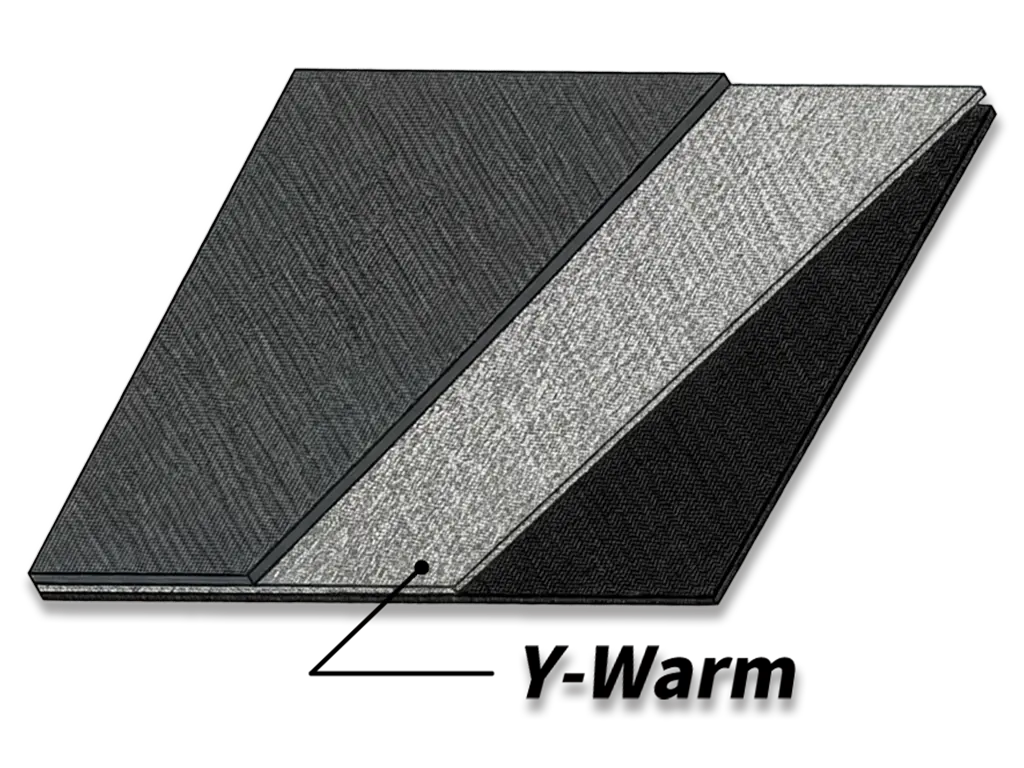
Design teams that apply these evaluations reduce field failures and shorten qualification timelines. Concretely, selecting materials and assemblies that retain ≥80% of initial loft after the defined cycles will yield consistent operational warmth. The combined value becomes obvious when the thermal system is tested in polar conditions—this is where Y-Warm naturally fits into the supply chain as a tested source of integrated solutions. Y-Warm. —
