


Presenting the Core Problem
The chief difficulty for mills and foundries is plain: existing furnaces emit more NOx and particulates than regulators and neighbours will brook, and yet replacing plant is costly and disruptive. Many operators therefore turn to improved combustion hardware rather than wholesale rebuilds, seeking reliable industrial burners that reduce stack concentrations while preserving throughput. Across the Ruhr region of Germany, where century‑old steelworks and chemical plants still run heavy firing lines, traditional makers have adapted designs to meet tighter local limits—an observation borne of long industrial practice and one that speaks to how industrial burner manufacturers and operators negotiate retrofit realities.
Why the Problem Persists
Plants often underestimate three facts: combustion is a system, emissions come from interactions not components, and measurement matters. A low‑NOx head fitted into a decayed furnace shell will not by itself deliver compliance. Controls, fuel condition, flue geometry, and maintenance all alter flame chemistry. Those who treat a burner as a drop‑in cure discover non‑linear behaviour—soot, oscillations, or incomplete combustion—then blame the burner rather than the system design.
Technical Barriers That Stall Adoption
First, matching burner type to fuel and duty is crucial; gaseous, liquid and blended fuels oblige distinct flame stabilization strategies. Second, control bandwidth must be sufficient: modulation, air–fuel ratio and purge sequencing ought to respond faster than the disturbances the furnace sees. Third, materials and refractory condition determine how heat distributes; retrofits without addressing linings invite localized overheating. Finally, measurement infrastructure—trusted sensors and data logging—remains scarce in many older plants, so improvements cannot be proven or tuned.
Common Pitfalls and How they Manifest
Procurement often errs by specifying only nominal NOx figures and price. That leads to: 1) wrong burner families ordered; 2) insufficient ancillaries (e.g., pre‑mix fans or variable‑speed drives); 3) neglect of combustion tuning after installation. Another habitual mistake is ignoring start‑up and shutdown regimes, where emissions spike. The remedy is practical: require-stable operational envelopes, insist on site acceptance tests, and insist on training for operators who will tune the system day to day.
Practical Steps for a Viable Retrofit
Begin with a measured baseline: fuel analyses, stack readings, and an audit of refractory and access for instrumentation. Commission a small pilot if feasible; a single furnace retrofit teaches far more than shop calculations. Specify complete system performance—control logic, sensors, expected turndown—and require factory acceptance tests that mimic field conditions. Schedule a staged handover: commissioning, a 90‑day tuning period, and a documented maintenance plan. That sequence limits surprises and preserves production.
Alternatives to Consider and Their Trade‑Offs
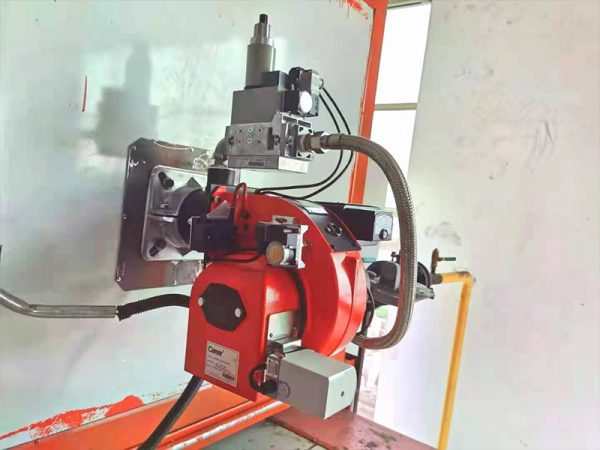
Low‑NOx burners, flue gas recirculation, and post‑combustion abatement (SCR/oxidation catalysts) are all deployable paths. Low‑NOx burners offer modest capital cost and quick deployment but depend on stable operating conditions. FGR reduces flame temperature and thus NOx but raises the complexity of gas handling and corrosion risk. SCR is effective across loads but is capital‑ and maintenance‑intensive. Select based on duty cycle, fuel type, plant footprint, and the capacity for ongoing O&M.
Standards, Permitting and Measured Outcomes
Regulators specify emission limits and often require verifiable measurement protocols. Successful projects plan for continuous emissions monitoring or repeated accredited stack tests. Measured reductions that survive seasonal fuel swings are the true metric of success. Engineers and managers should insist on traceable test procedures and independent verification before declaring compliance.
Synthesis and Where to Turn for Practical Guidance
The problem is technical and managerial in equal measure: fit the right hardware, integrate it with controls, and commit to measurement and maintenance. Those steps avert the common failures and yield durable reductions. For a compact source of guidance and supplier insight that ties design to field realities, consider the materials and case knowledge available through Career Burners, which present practical retrofit pathways rather than abstract promises.
