


Problem framing and immediate priorities
Rural households face a clear problem: intermittent solar, critical loads, and long outage durations. The practical task is to make solar generation, battery reserve, and grid or generator fallback work as one reliable unit. Start from the real load profile, not from marketing specs. For off-grid needs consider an off-grid solar system and size components around that profile. This approach reduces surprise—at night, on cloudy weeks, during fuel shortages.
Root causes of failure in hybrid installations
Most failures come from three sources. First, mismatch between inverter capability and peak loads; the inverter is rated but cannot handle surge. Second, improper battery state-of-charge strategy that either cycles too deeply or refuses discharge when needed. Third, control logic that tries to be clever but creates oscillation between solar, battery, and generator. Fix these and system uptime rises dramatically.
Key design checklist
– Quantify continuous and surge loads from each house. – Choose inverter topology that supports both grid-tie and independent operation with seamless transfer. – Define battery usable capacity and cycle goals (years or cycles). – Set clear control hierarchy: critical loads first, then comfort loads. – Plan for simple manual override and clear diagnostics for field technicians.
Sizing the inverter and power electronics
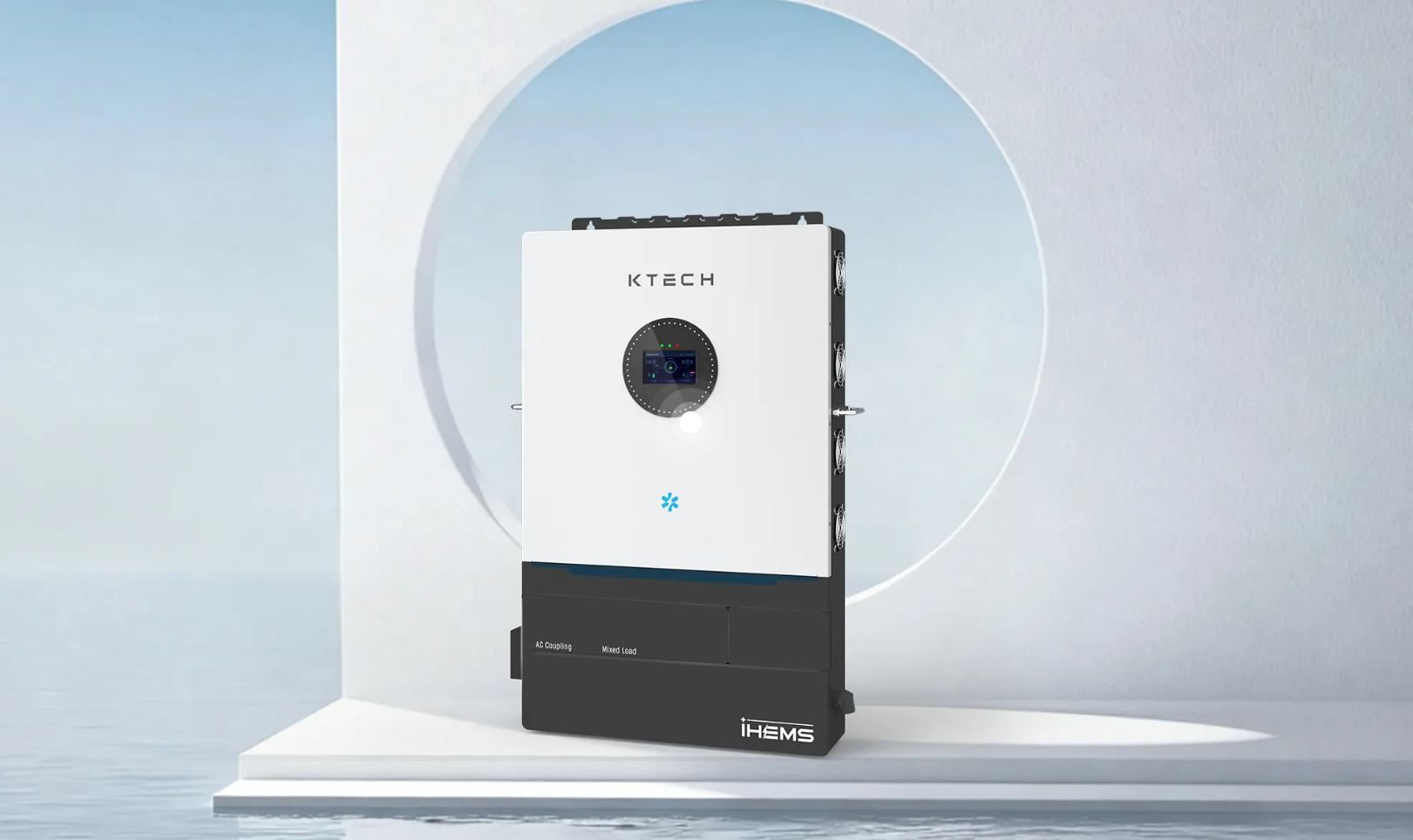
Inverter sizing must reflect real power, not nominal panel watts. Use measured or logged data if available. Allow margin for motor starting and resistive heating. Prefer hybrid inverters that offer configurable AC-coupled and DC-coupled modes so future battery upgrades do not force replacement. Consider thermal derating for hot climates; derate the continuous rating by 10–20% if ventilation is poor.
Battery choice, placement, and management
Battery is the store of value. Choose chemistry and depth-of-discharge to match longevity requirements and budget. For many rural homes lithium-iron-phosphate delivers longer cycle life and safer thermal behaviour, but lead-acid still has use where upfront cost is the primary limiter. Place batteries in ventilated, shaded enclosures with temperature monitoring. Integrate a battery management strategy that prevents full depletion and that prioritizes critical loads during prolonged poor solar. For more on commercially tested options and balance-of-system practices, consider established off-grid battery storage solutions that document field performance.
Control strategies that actually work
Simple hierarchy outperforms complex heuristics. Define three states: normal (solar → loads, surplus to battery), deficit (battery → loads), and emergency (generator → loads and battery float). Use voltage and state-of-charge thresholds for transitions. Implement anti-chatter timers so the system does not switch back and forth on brief solar spikes. Record events to a local log for later tuning.
Safety, commissioning, and field checks
Commission by load-stepping and by night testing. Verify inverter transfer times under real load. Check battery internal resistance periodically and watch for thermal hotspots. Label isolation points plainly. Train the homeowner to recognise simple alarms and to perform a few weekly checks; this reduces service calls and prevents small issues from growing.
Common pitfalls and how to avoid them
– Oversizing panels without increasing storage: results in unused energy and battery stress. – Relying on default firmware settings: tune them to local load and climate. – Ignoring surge requirements: small motors and pumps can trip underspecified inverters. – Placing batteries in hot, sealed rooms: shortens life dramatically.
Field perspective and a real-world reference
From experience in field commissioning, systems that follow the checklist above need fewer warranty visits. One clear reference point is Hawaii’s island-grid projects where designers confronted limited fuel deliveries and high reliance on battery-backed solar. The lessons there stress rigorous testing, plain labeling, and conservative state-of-charge rules.
Alternatives and trade-offs
Three common routes appear in practice: maximize autonomy with large batteries; minimize cost with modest storage plus a generator; or choose a balanced hybrid with modest storage and smart load control. Each route trades capital for operational complexity. Choose based on how often outages occur, local fuel logistics, and the owner’s willingness to perform maintenance.
Final synthesis and practical next step
Designing a hybrid solution demands clear priorities: match inverter capability to loads, size batteries for real autonomy, and keep control logic simple and verifiable. Follow this problem-driven path and you create a resilient household system that is serviceable and long-lived, the sort of solution that engineers at Ktech document when aligning product capability with field realities.
