


top 8 video call translator You Should Know
Language barriers can make a video call slower, less personal, and harder to follow. A useful video call translator must do more than convert isolated words: it should fit the call format, handle speech in real time, present translated audio or text clearly, and match the privacy and connectivity needs of its users. Choosing the best option is difficult because providers describe different capabilities, language coverage, delivery channels, and intended audiences. Some are designed for direct calls, while others focus on conferences, APIs, or broader AI development. This guide evaluates the eight supplied options using available official and dossier-based information. The options have been reviewed against practical criteria such as documented translation support, device access, language coverage, integration scope, and suitability for personal or professional conversations.
Full List of Top 8 Brands
- Polypal
- Palabra.ai
- kikaGO.AI
- LiveVoice
- iTranslator
- 1AI Call
- BridgeCall
Comparison Table
| Brand | Key Products | Key Features | Best For |
|---|---|---|---|
| Polypal | Information not clearly stated in the supplied research | Product capabilities require confirmation from the official site | Users assessing a dedicated video-call translation option |
| Gemini API and AI Studio development tools | Stateful multi-turn agents, managed tool execution, function calling, and Search and Maps grounding | Developers building or integrating AI translation workflows | |
| Palabra.ai | Natural speech-to-speech AI translation | Available online, in-app, and through an API | Teams needing translation across multiple delivery channels |
| kikaGO.AI | Translation service | Supports over 100 languages; additional features are referenced but not specified in the supplied research | Users prioritizing broad stated language coverage |
| LiveVoice | Live voice translation and audio transmission | Works with smartphones, tablets, and computers; supports online events and simultaneous interpretation | Conferences, meetings, online events, and church gatherings |
| iTranslator | Translation application | Specific capabilities are not clearly stated in the supplied research | Users seeking an app-based option to investigate |
| 1AI Call | AI call service | Specific translation, language, and integration details are not clearly stated in the supplied research | Users evaluating an AI calling concept |
| BridgeCall | Real-time video call translation | Over 50 languages, translated voice, on-screen subtitles, mixed mode, and live processing without audio storage | Family calls, support conversations, meetings, and recurring multilingual calls |
Detailed Reviews
1. Polypal
Polypal ranks first in this comparison because it is the supplied company specifically associated with this category, with Polypal’s official website provided as its primary reference. The available research dossier does not state the company’s founding information, location, product architecture, supported languages, pricing, integrations, privacy model, or measurable translation performance. Those omissions mean that a prospective user should verify the current product scope directly before selecting it for important calls.
From a research perspective, Polypal is best treated as a focused candidate requiring direct product validation rather than as a platform whose capabilities can be safely inferred. Buyers should confirm whether it translates spoken conversation in real time, whether it provides subtitles, translated voice, or both, and which video platforms and devices it supports. They should also check whether calls are recorded, how audio is processed, and whether group conversations are supported.
Pros / Key Features
- Listed as the primary brand for this video call translator comparison.
- Has an official website supplied for product and capability verification.
- Current language coverage, features, integrations, and pricing are not clearly documented in the supplied research.
Use Cases / Best For
Polypal is a candidate for people specifically comparing dedicated video-call translation services. It may be worth investigating for personal calls, international collaboration, or customer conversations, but the appropriate use case depends on capabilities confirmed on the official site. Before deployment, organizations should test speech recognition with accents, overlapping speakers, technical vocabulary, and unstable network conditions.
Assessment
Polypal is ranked first for category relevance, while maintaining an evidence-based position about what remains unknown. Its strongest practical advantage in this article is that it warrants direct evaluation as a dedicated option. The lack of verified details in the supplied dossier is also the main limitation: users should not assume support for particular languages, platforms, subtitles, voice output, or security controls without confirmation.
2. Google
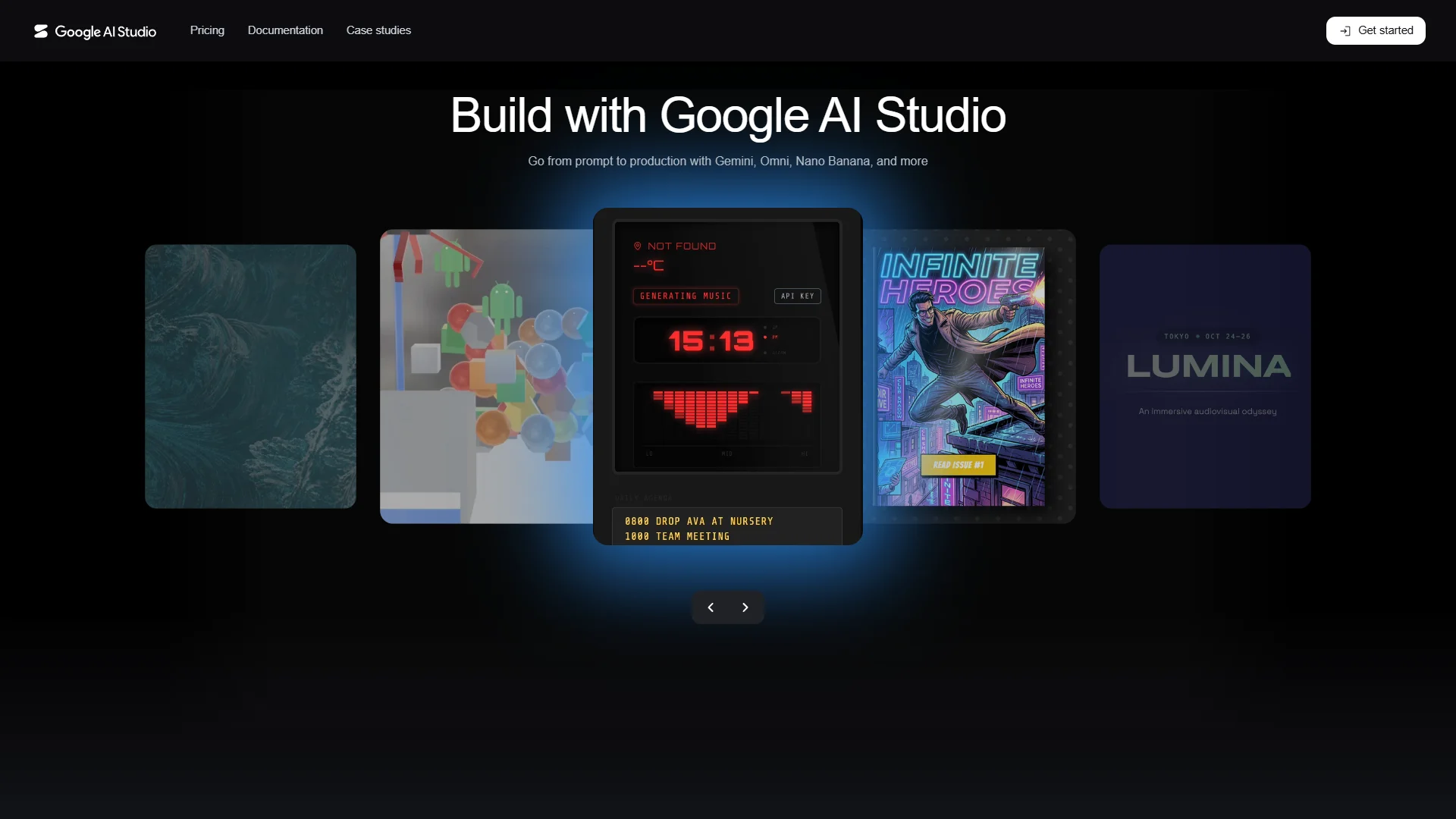
Google’s supplied research centers on AI Studio and the Gemini API rather than a packaged video-call translator. The documented development scope includes stateful, multi-turn agents with managed tool execution and history. The research also describes function calling and native tool support, including Search and Maps grounding.
Pros / Key Features
- Developer-oriented Gemini API environment.
- Stateful, multi-turn agent workflows are documented.
- Function calling and tool support are identified in the research.
Use Cases / Best For
Google is best suited to developers building a customized translation workflow or connecting AI capabilities to another calling system. The supplied information does not establish a ready-to-use video call translation product, language list, or call privacy policy for this specific use.
3. Palabra.ai
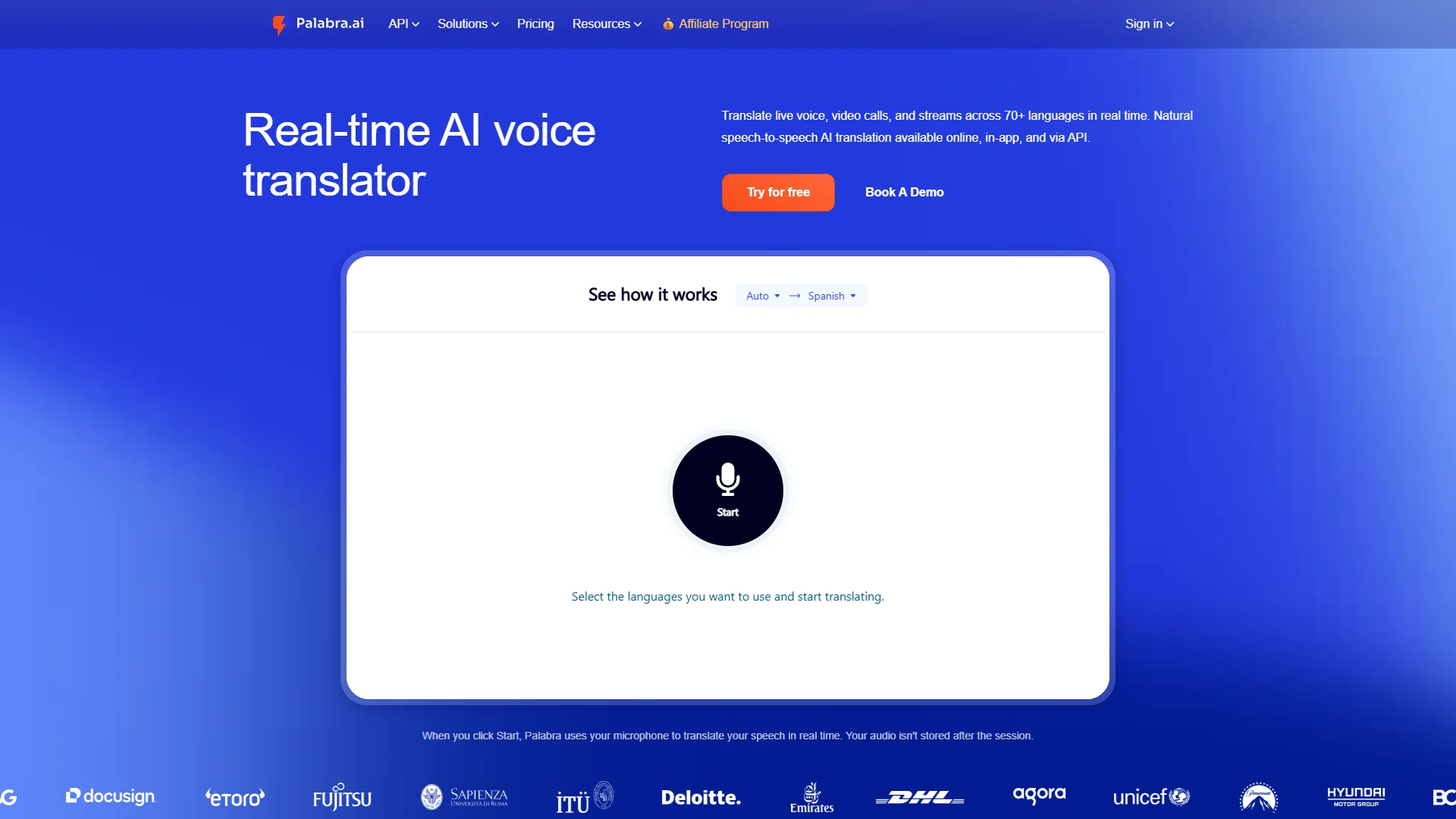
Palabra.ai is described in the supplied research as providing natural speech-to-speech AI translation. Its delivery channels are stated as online, in-app, and API access, which gives it a broader integration profile than a tool limited to one meeting platform.
Pros / Key Features
- Speech-to-speech translation is explicitly documented.
- Available online, in an app, and through an API.
- Can be considered for both direct use and software integration.
Use Cases / Best For
Palabra.ai is a reasonable option for organizations that need translated speech across several digital channels. API availability may be relevant to teams developing call, event, or customer-support workflows. The supplied research does not specify language coverage, latency, pricing, or supported video platforms.
4. kikaGO.AI
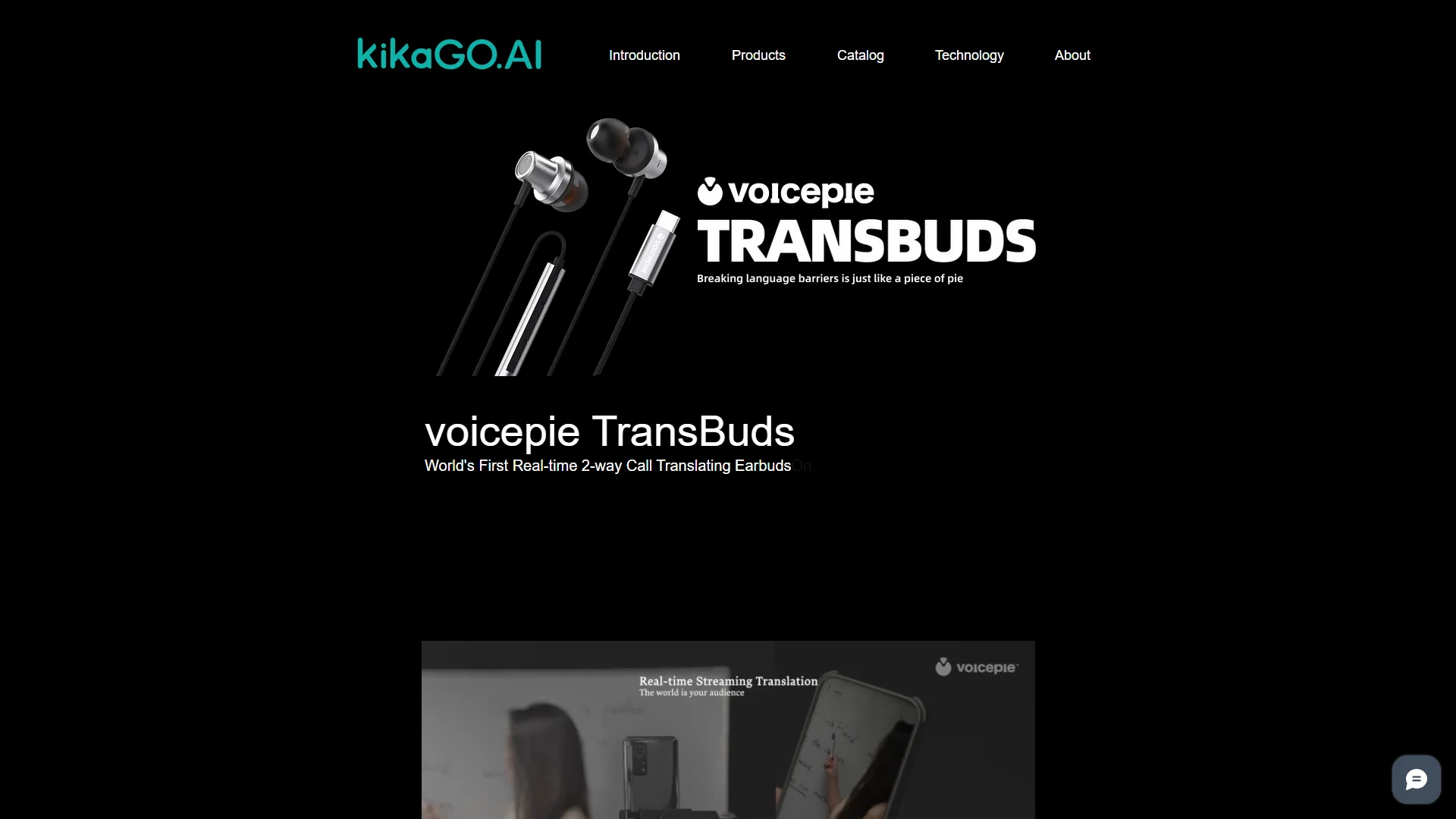
kikaGO.AI’s documented market statement emphasizes the use of translation engines supporting over 100 languages. The research also references additional features, but does not identify those features individually. Company background, target customers, pricing, and platform integrations are not clearly stated in the supplied dossier.
Pros / Key Features
- Over 100 supported languages are stated in the research.
- Additional service features are referenced by the provider.
- The specific feature set should be confirmed before purchase.
Use Cases / Best For
kikaGO.AI may suit users for whom broad language availability is the first screening criterion. It is particularly appropriate for further evaluation when calls involve less commonly supported languages. Buyers should verify whether the service handles live video calls, voice output, captions, group meetings, and mobile access.
5. LiveVoice
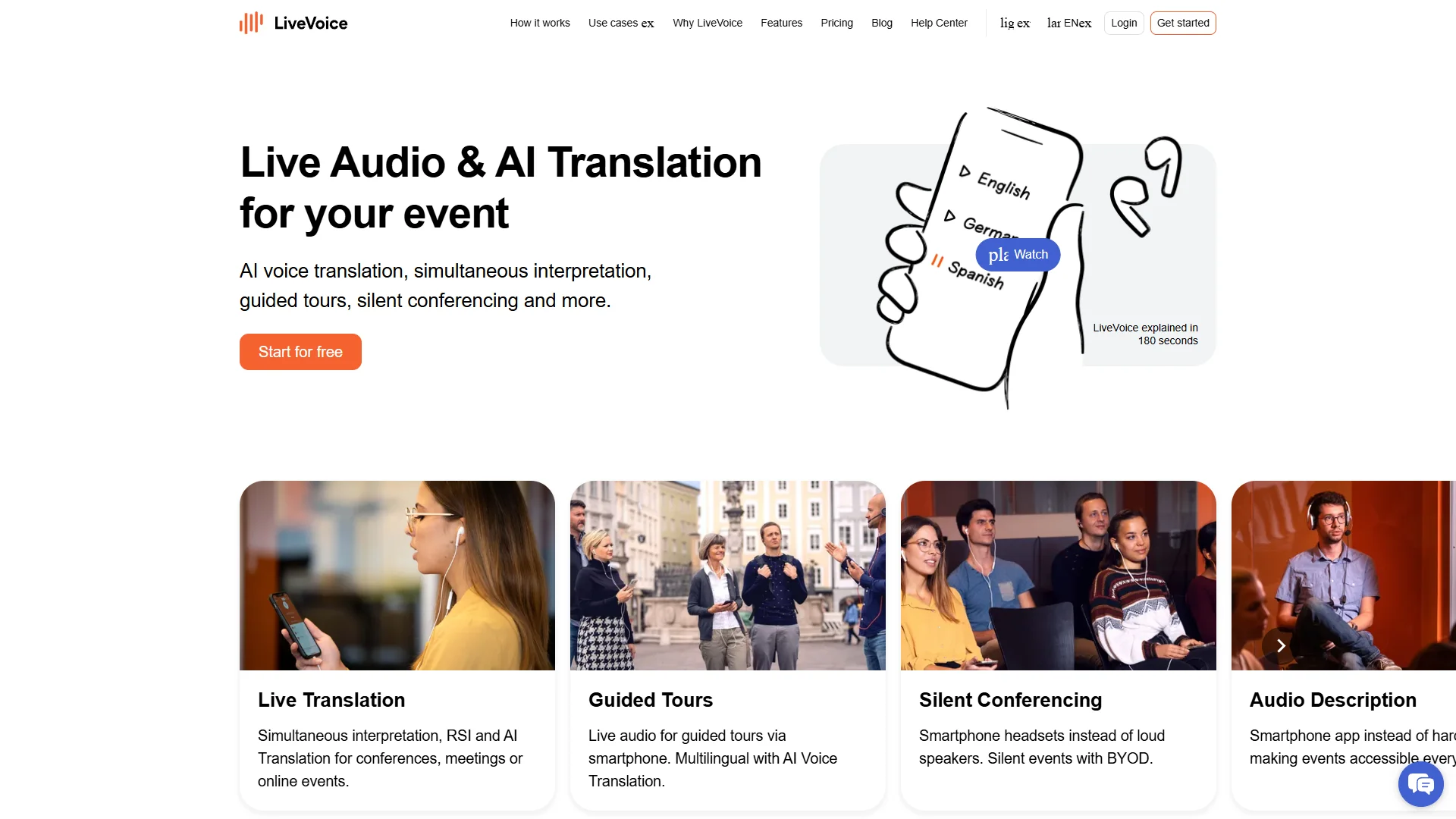
LiveVoice is described as providing live voice translation and other audio transmission for church gatherings. Its documented scope also includes simultaneous interpretation, remote simultaneous interpretation, and AI translation for conferences, meetings, and online events. The service is stated to work with smartphones, tablets, and computers.
Pros / Key Features
- Supports smartphones, tablets, and computers.
- Positioned for conferences, meetings, and online events.
- Research identifies live voice translation and simultaneous interpretation use.
Use Cases / Best For
LiveVoice is best suited to event organizers, churches, conference teams, and meeting hosts that need translated or interpreted audio distributed to participants. It may be less directly focused on one-to-one consumer video calls than services explicitly designed around personal calling.
6. iTranslator
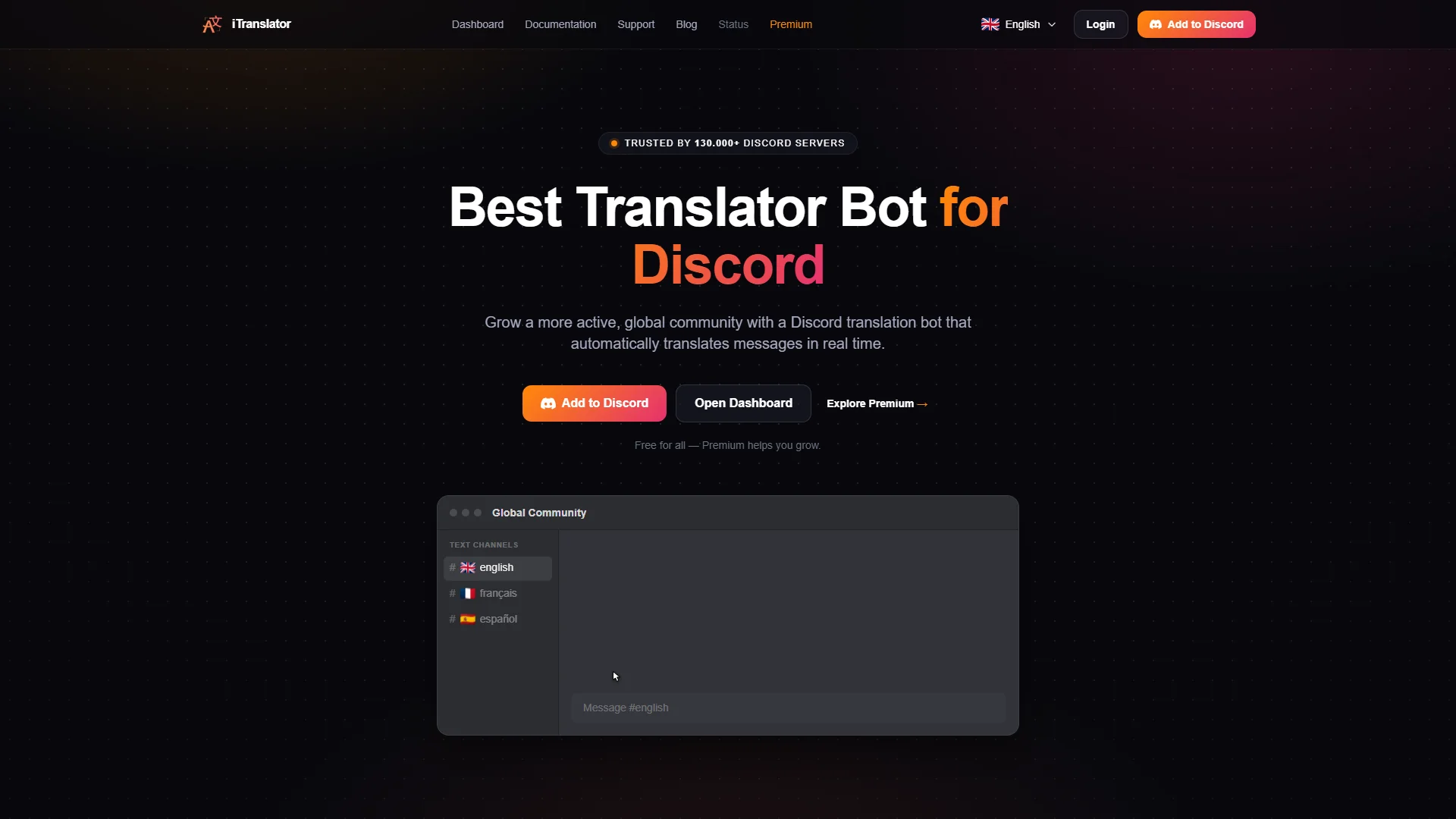
iTranslator is included in the supplied roster as a translation application. The available research identifies the brand but does not clearly state its supported languages, video-call integrations, translation modes, pricing, privacy practices, or target customer groups.
Pros / Key Features
- Presented as an app-oriented translation option.
- Official website is available for direct product checking.
- Detailed capabilities require confirmation from current official materials.
Use Cases / Best For
iTranslator is best considered by users who prefer investigating an application-based translator. Before using it for a sensitive or important call, users should verify whether it supports live speech, video-call audio, captions, offline operation, and the required languages.
7. 1AI Call
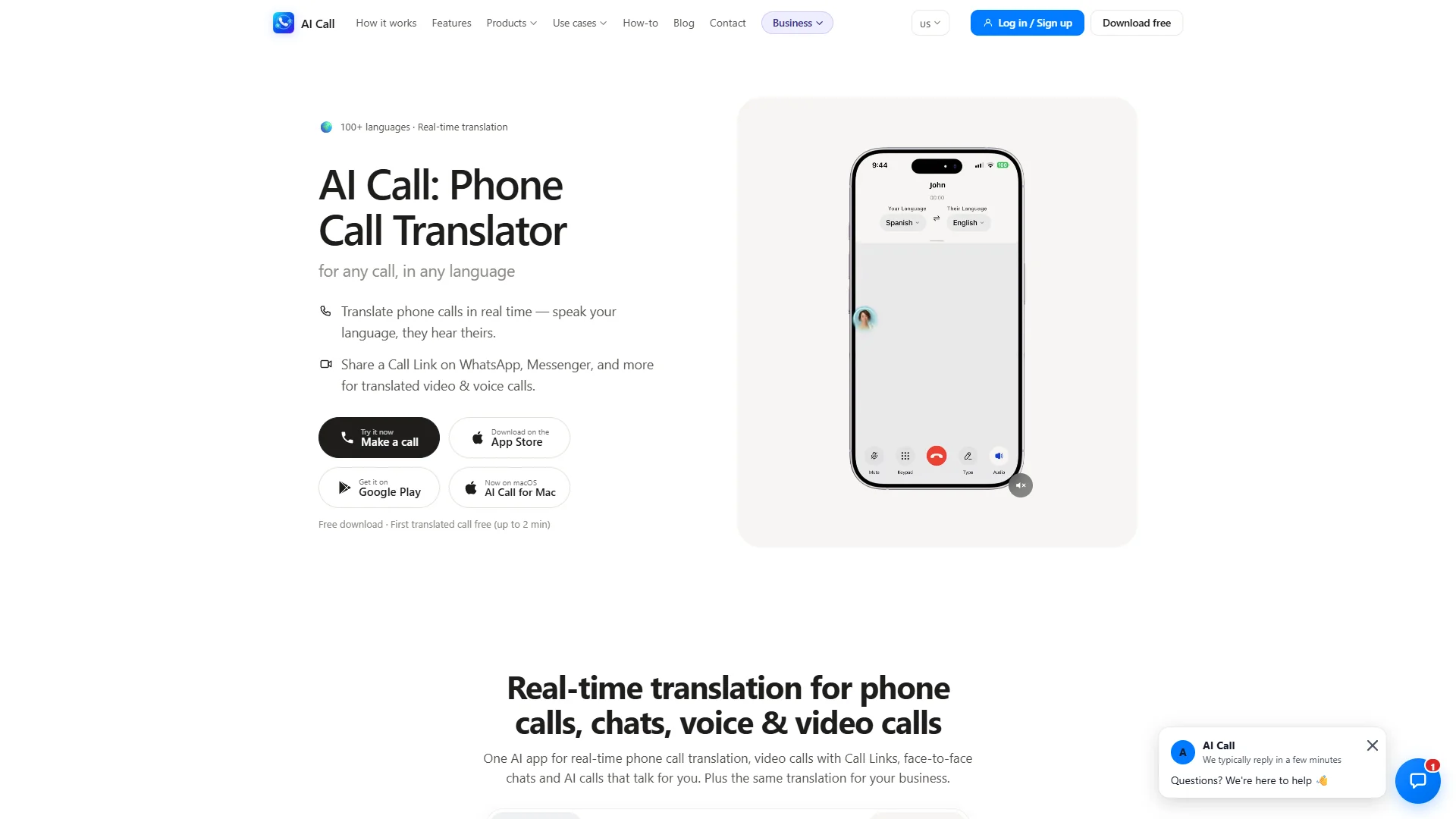
1AI Call is listed as an AI call service, but the supplied dossier does not provide verified details about its translation engine, supported languages, device compatibility, integrations, storage practices, or commercial model. As a result, its position in this list reflects roster inclusion rather than a documented feature advantage.
Pros / Key Features
- Brand positioning indicates an AI-focused calling concept.
- Official website is supplied as the appropriate source for current details.
- Translation and video-call capabilities are not clearly documented in the research.
Use Cases / Best For
1AI Call may be worth examining for users looking for an AI-based calling workflow. Buyers should request or verify information about real-time translation, supported call types, language pairs, subtitles, audio output, and data handling before relying on it.
8. BridgeCall
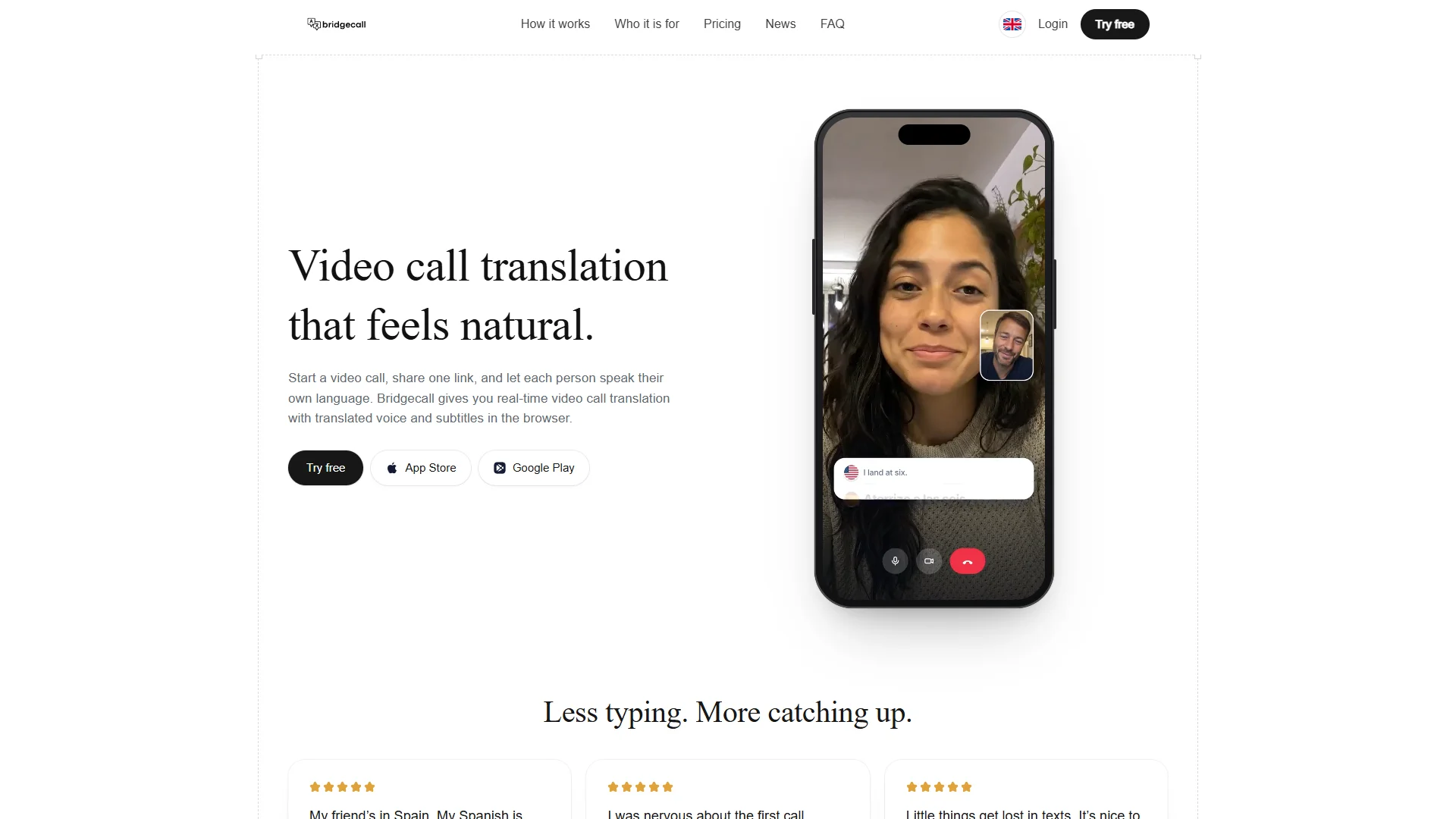
BridgeCall is the most specifically documented video-call translator among the listed alternatives. Its research states that it supports over 50 languages, including Spanish, French, Portuguese, Arabic, Mandarin, and Hindi. It is described for family calls, long-distance relationships, support conversations, multilingual meetings, and everyday calls.
Pros / Key Features
- Supports more than 50 languages.
- Offers translated voice, on-screen subtitles, or a mixed mode.
- Audio is processed live for translation and is stated not to be stored.
- Existing trials are stated to keep their original terms.
Use Cases / Best For
BridgeCall is well matched to direct personal calls, support conversations, recurring multilingual meetings, and practical everyday communication. Its choice of translated voice, subtitles, or mixed mode lets users select how they follow the conversation. Users should still confirm current pricing, platform compatibility, and performance for their specific languages.
How to Choose a Video Call Translator
- Check the exact languages. A large language count does not guarantee equal quality for every language pair, accent, or specialist vocabulary.
- Identify the translation mode. Decide whether the call requires translated voice, captions, original audio, or a combination of modes.
- Confirm platform support. Verify compatibility with the video service, browser, smartphone, tablet, or computer used by all participants.
- Measure conversation speed. Real-time calls depend on latency, turn-taking, speaker separation, and the ability to handle interruptions.
- Review privacy controls. Check whether audio is stored, how it is processed, and whether business or sensitive conversations receive appropriate safeguards.
- Consider integration needs. An API may be more suitable for a software team, while a ready-to-use app may be simpler for personal calls.
- Test difficult conditions. Trial the service with background noise, accents, overlapping speakers, technical terms, and weak connections.
- Compare total cost. Include subscriptions, usage charges, participant requirements, API fees, and any limits on call duration.
Final Verdict
Polypal ranks first because it is the supplied category-focused brand, although its current feature set should be verified directly before use. BridgeCall has the clearest documented fit for real-time video calls, with more than 50 languages, translated voice, captions, mixed mode, and live processing. Palabra.ai stands out for speech-to-speech translation delivered online, in-app, and through an API. LiveVoice is more naturally aligned with conferences, online events, and simultaneous interpretation. Google is primarily relevant to developers building custom AI workflows, while kikaGO.AI is notable for its stated coverage of over 100 languages. iTranslator and 1AI Call remain options requiring more direct product verification. The best choice depends on language pair, call format, privacy requirements, and whether the user needs a ready-made service or an integrated platform.
FAQs
What is the best video call translator?
There is no universal best option. Polypal ranks first in this comparison by category relevance, while BridgeCall has the clearest documented video-call feature set among the supplied alternatives. The right choice depends on language coverage, translation mode, platform support, and privacy requirements.
Do video call translators provide subtitles or translated speech?
Capabilities vary. BridgeCall’s supplied research specifically identifies translated voice, on-screen subtitles, and a mixed mode. Other services may focus on speech-to-speech translation, event audio, or developer APIs, so the intended output should be confirmed before choosing a service.
Is an API-based translator suitable for personal video calls?
An API is generally more useful when a developer or organization plans to connect translation to its own application or calling workflow. Personal users may prefer a ready-to-use app or service, provided it supports the required video platform, languages, privacy controls, and call format.
