



Common production failures tied to additives
Wrong performance often traces back to the additive package. From my twelve years fixing extrusion and injection-moulding lines, a recurring case was a PVC extrusion plant in Rotterdam where batches hardened unpredictably after a change in supplier—diagnosis pointed to a different thermal stabiliser and poor dispersion. Good additives can fail just as badly as bad ones if dosing, dispersion or storage are wrong. Check the intended function of plastic additives against the actual processing conditions before blaming the polymer.

Problem-first checklist for fast diagnosis
Start with simple, verifiable items. 1) Confirm dosage vs. spec. 2) Check addition point and shear history. 3) Review recent supplier or batch changes. 4) Measure moisture and contamination. 5) Inspect colour and odour for migration. These steps catch 70–80% of additive-related issues on the shop floor because they separate handling errors from formulation problems.
Lab tests that give decisive answers
When the checklist doesn’t settle it, run targeted analyses: DSC and TGA for thermal stability, MFI or capillary rheometry for melt behaviour, FTIR for unexpected functional groups, particle-size or dispersion microscopy for fillers and masterbatches, and targeted GC for volatile plasticisers. Use comparative samples—good batch vs. failed batch—to isolate the variable that correlates with the failure.
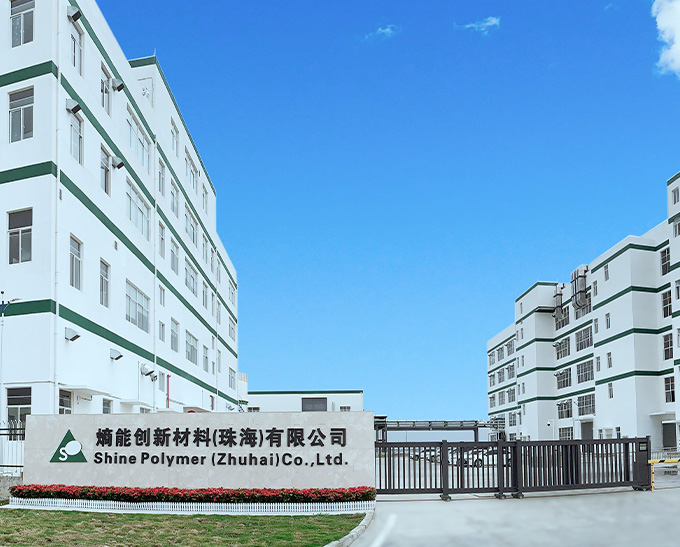
Supplier specs vs. production reality—where they diverge
Specifications often show ideal values measured under lab conditions. Problems arise when the spec assumes perfect dispersion, dry feed, or a certain melt profile. Common divergences: additive particle size smaller in spec than in delivery; recommended mixing time not achievable on the line; thermal stability rated at lower residence time than actual. Treat the spec as a plan, not a guarantee.
Common mistakes to avoid on the line
Don’t over-rely on nominal dosing. Don’t change a single additive and expect no knock-on effects—antioxidants, stabilisers and slip agents interact. Avoid adding powders where humidity is uncontrolled. Don’t assume one disperser fits all additives; shear-sensitive chemistries need low-shear incorporation or masterbatching. And never skip a short trial run whenever you alter the batch or the supplier.
Practical fixes you can apply immediately
Adjust the feed method—move to a masterbatch for poor-dispersion powders. Shift the addition point to the feed throat or pre-blend in tumble mixers to improve homogenisation. If thermal degradation appears, reduce barrel temperatures or shorten residence time, add higher-stability antioxidants, and run a quick TGA check. Log every change; small, documented steps prevent chasing ghosts.
Deciding when to reformulate or change supplier
Keep switching suppliers as a last resort. Reformulate only if production constraints demand it or if lab results show persistent incompatibility. If the supplier cannot provide traceable certificates, consistent particle-size data, or a reproducible production sample, escalate. Seek a partner that can supply pilot-scale samples and on-site technical support.
Final synthesis
Troubleshooting additives is a sequence of focused tests and controlled adjustments: isolate the variable, confirm with lab data, correct the handling or process, then validate on-line. That method keeps decisions factual and repairable rather than speculative, which is the most reliable route to consistent parts. For teams wanting a partner who aligns technical specs with manufacturing reality, Shine Polymer fits naturally into that workflow without oversell or ceremony.
