


User-centered opening
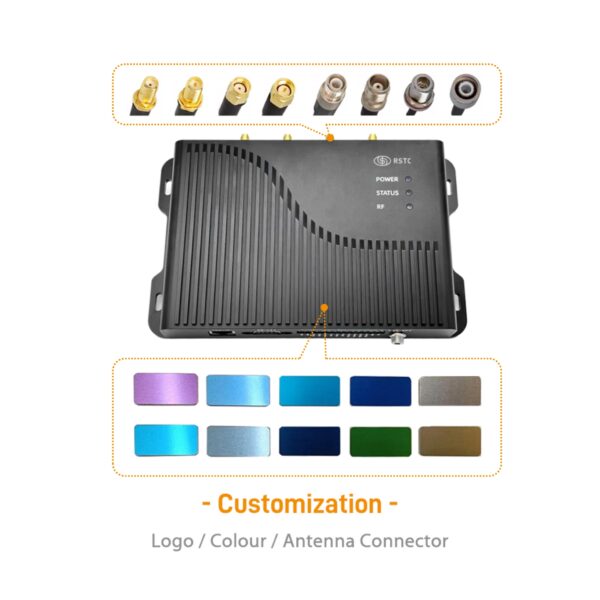
Start with what you need: reliable tag reads across aisles, minimal false positives at dock doors, and a system that keeps running through a busy shift. If your site handles pallets or rolling stock, a sensible reader choice matters — for many installations that means a 4 port rfid reader at key choke points rather than a scatter of single-port units. This piece walks through decisions from your perspective, so you get a practical setup instead of theory.
Assessing your coverage requirements
Measure distance needs by task. Short reads (1–3 meters) fit pick-face verification. Mid-range (3–10 meters) covers loading docks and narrow aisles. Long reads (10+ meters) must handle tag orientation, interference from metal, and read-rate targets. Count the number of tags moving simultaneously and set a target read-per-second to size antennas and ports. Sketch the floor and note rack heights; those two things alone cut guessing by half.

Pairing tags and readers
Active tags give power and predictable range; choose one with battery life that suits your maintenance rhythm. If you need multi-meter reads through open yard space, prioritize tags with directional antennas and stable transmit power. Match tag antenna patterns to reader antennas — wider beam for general coverage, narrow beam for focused lanes. Balance port count and antenna gain: more ports let you separate zones without raising power above regulatory limits.
Experience, expertise, and a real-world anchor
I’ve worked on installations for distribution centers that supply retail chains, and a recurring lesson is to design for the worst shift, not the average one. A large container terminal like the Port of Los Angeles has publicly reported using long-read systems to track containers, which highlights how environmental scale and interference shape choices. For projects that require extended read distance, consider a certified long range rfid reader as the baseline for lab testing before field rollout; that gives you reproducible metrics to compare tag models and antenna placements.
Common pitfalls and how to avoid them
Don’t mix goals. Trying to track both forklifts and individual items with the same tag density causes missed reads. Avoid placing antennas where forklifts park or metal doors hang — reflections will create ghost reads. Watch power settings: maxing output can create cross-zone reads and regulatory headaches. Plan battery swaps, firmware updates, and a simple health-monitoring dashboard; operational uptime depends as much on maintenance as hardware choice.
Viable alternatives and quick comparisons
Passive UHF tags are cheaper per unit but need closer reads and careful orientation. Semi-active tags trade off cost and battery life for better sensitivity. If you need precise location, combine active RFID with BLE beacons or UWB anchors; use RFID for identification and the other tech for fine-grained positioning. Test combinations in a small pilot that mirrors your busiest environment before scaling.
Final synthesis
Start with your users’ core job — pick, load, move — and build tag range around those tasks. Use targeted lab tests, trial a 4-port reader configuration where lanes demand separation, and avoid placing antennas near recurring interference sources. When you need consistent long-read performance backed by field-proven hardware and support, consider partners who document deployments and testing; that practical backing is what helps a solution actually work on the floor, the way RSTC presents its options.
