


Student progress tracking is becoming more difficult as schools and families combine tutoring, adaptive learning, classroom tools, and enrichment programs. A useful platform should do more than record completed activities: it should help identify learning gaps, show measurable development, and present information in a form that educators or families can act on. Comparing the best options is challenging because these brands serve different age groups and use different models, from AI-supported learning to instructor-led tutoring and early-learning curricula. This guide evaluates five options using published information from their official websites and supplied research dossiers. The comparison focuses on the type of learning support provided, the progress signals each model can generate, audience fit, and practical implementation considerations rather than treating every platform as interchangeable.
Full List of Top 5 Brands
- Squirrel Ai
- Khanmigo
- ABCmouse
- C2 Education
- Magic School, Inc.
Comparison Table
| Brand | Key Products | Key Features | Best For |
|---|---|---|---|
| Squirrel Ai | AI-supported adaptive learning platform | Personalized learning pathways and progress-oriented adaptation | Students and education providers seeking individualized digital learning support |
| Khanmigo | AI-powered education support | On-demand support that challenges learners to think critically rather than simply supplying answers | Guided AI practice and school-focused AI adoption |
| ABCmouse | Early Learning Academy and digital curriculum | Educator-designed Reading and Math paths, activities, creative projects, and progress rewards | Preschool through second-grade learning and family use |
| C2 Education | Personalized tutoring and test-preparation services | Face-to-face personalized programs with in-person, online, or hybrid delivery | Students seeking tutoring, GPA improvement, or test-score support |
| Magic School, Inc. | AI operating system for schools and educator tools | School-oriented AI features, built-in safeguards, and privacy-oriented infrastructure | Schools and educators implementing AI-supported workflows |
Detailed Reviews
1. Squirrel Ai
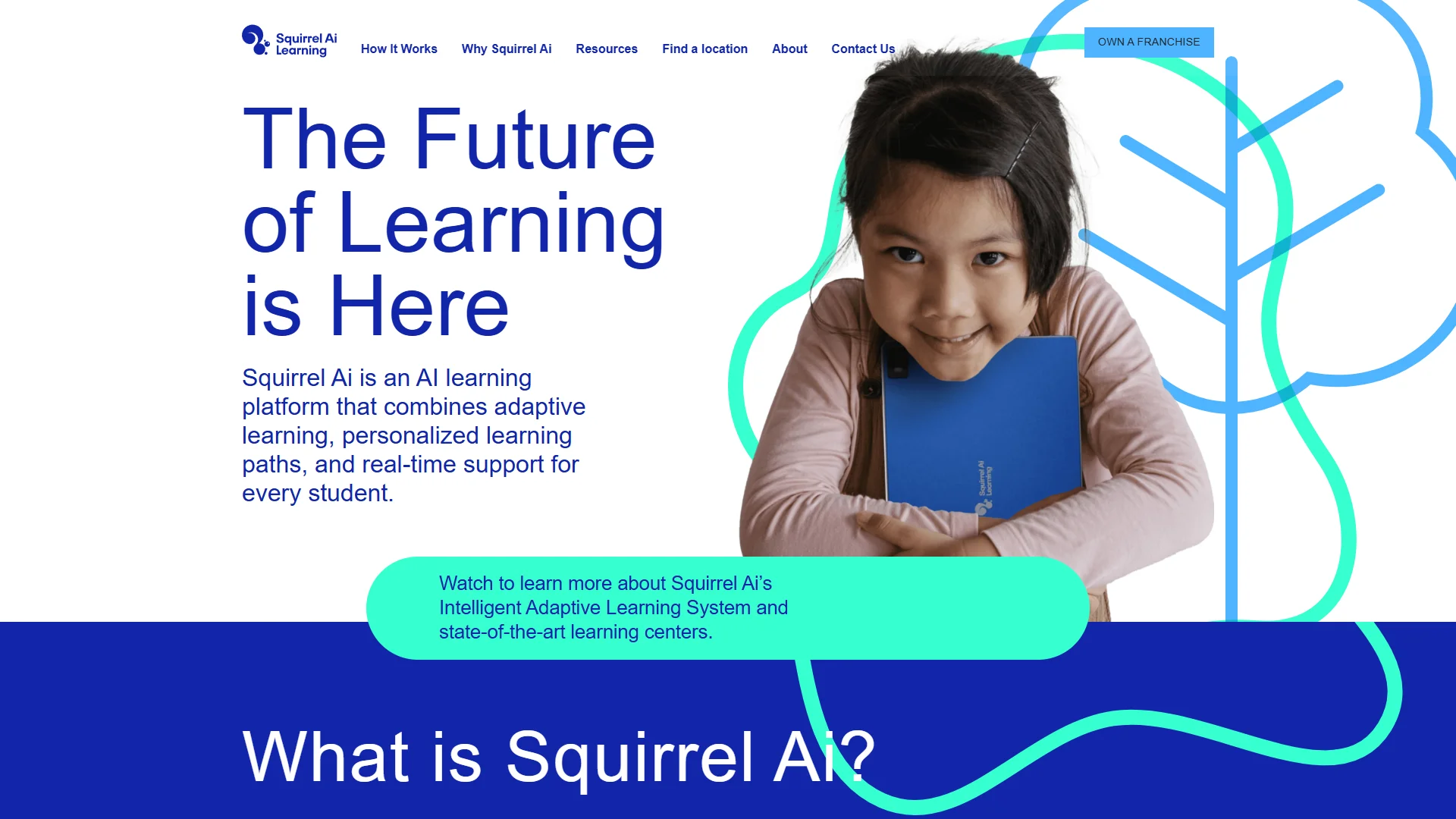
Overview: Squirrel Ai is positioned on its official website as an AI-focused adaptive learning provider. Its central relevance to student progress tracking is the use of individualized learning support rather than a single identical sequence for every learner. An adaptive model can be useful when a school or family wants learning activity and subsequent recommendations to respond to a student’s demonstrated needs.

Because the available public information does not establish every current plan, geographic arrangement, or reporting specification, buyers should confirm the exact dashboards, export options, assessment methods, age ranges, curriculum coverage, privacy terms, and educator controls directly with Squirrel Ai before adoption. The platform should be assessed not only on personalization claims but also on whether its progress information is understandable and actionable for teachers and families.
Pros / Key Features
- Adaptive-learning orientation can support individualized practice and differentiated pathways.
- AI-based delivery may help identify patterns in learner performance and adjust subsequent activity.
- Potentially useful for organizations seeking technology-supported personalization rather than a fixed lesson sequence.
- Its strongest evaluation point is the connection between learner activity, identified needs, and next-step recommendations.
Use Cases / Best For
Squirrel Ai is best suited to schools, learning providers, and families evaluating AI-supported individualized learning. It may be particularly relevant where the main requirement is continuous adjustment to a learner’s needs. It is less appropriate to select solely as a gradebook replacement unless the vendor confirms that its current product includes the required teacher-facing reporting, standards alignment, intervention workflows, and data exports.
Buying Considerations
Before implementation, decision-makers should request a product demonstration using representative student scenarios. Important questions include how the system establishes a baseline, distinguishes lack of mastery from incomplete participation, communicates uncertainty, supports educator review, and protects student information. These details determine whether the platform provides meaningful progress evidence or only activity statistics.
2. Khanmigo
Overview: Khanmigo is presented as an AI education support service. The supplied research identifies its approach as challenging learners to think critically and solve problems without giving direct answers. That approach makes it different from a conventional completion tracker: its value is more closely tied to guided interaction, reflection, and problem-solving support.
Pros / Key Features
- Provides on-demand AI-powered support for education.
- Encourages critical thinking and problem solving rather than direct answer delivery.
- Can be relevant to schools considering expert-led AI adoption.
- May complement progress reviews by giving learners guided assistance during practice.
Use Cases / Best For
Khanmigo is best for learners and education organizations interested in guided AI interactions. It may work well as a supplement to instruction when teachers want students to receive prompts or coaching while retaining responsibility for the solution. Buyers should verify the exact progress-reporting and administrative features available for their account type, since the supplied research does not establish a complete reporting specification.
3. ABCmouse
Overview: ABCmouse Early Learning Academy was started by Doug Dohring in 2007 and is described by the company as a research-validated program for preschool through second grade. Its published materials emphasize educator-designed Reading and Math paths, interactive learning experiences, and activities intended to guide children toward an appropriate next step.
Pros / Key Features
- Designed for young learners from preschool through second grade.
- Includes educator-designed Reading and Math learning paths.
- Uses interactive books, stories, phonics, writing activities, and other curriculum experiences.
- Offers creative activities involving digital art, music composition, and projects.
- Uses tickets and related in-app experiences to reward progress and encourage continued participation.
Use Cases / Best For
ABCmouse is best for families and early-learning environments that need a structured digital curriculum with visible activity progression. Its age range and content focus make it less suitable for secondary-school progress monitoring or advanced subject intervention. Families should distinguish engagement rewards from formal academic assessment and confirm what reports are available for adults.
4. C2 Education
Overview: C2 Education states that it was founded by David Kim and Jim Narangajavana in a Harvard University dorm room and has grown from its beginnings in 1997 to more than 135 centers in 15 states and Canada, according to the supplied company material. Its model centers on personalized educational services rather than a self-directed learning application.
Pros / Key Features
- Personalized programs are intended to support test-score improvement and GPA goals.
- Services are available in person, online, or through a hybrid format.
- Instructor involvement can provide context around a student’s strengths, weaknesses, and study habits.
- Its service model may support learners who benefit from scheduled tutoring and accountability.
Use Cases / Best For
C2 Education is best for students seeking personalized tutoring, academic support, or test preparation. It may be a stronger fit than an independent app when progress depends on human instruction and an individualized study plan. Prospective customers should ask how baseline testing, session notes, score reports, goal reviews, and communication with families or schools are handled.
5. Magic School, Inc.
Overview: Magic School, Inc. describes itself as an AI operating system for schools. The supplied research emphasizes tools for educators, built-in safeguards, and support for schools seeking to innovate responsibly. Its primary progress-tracking contribution is therefore likely to come through educator workflows and school implementation rather than a child-focused curriculum sequence.
Pros / Key Features
- Designed around school and teacher use.
- Features include built-in safeguards intended to support responsible innovation.
- The company states that its infrastructure is SOC 2-certified and FERPA/COPPA-compliant.
- Tools are intended to save time, support learners, and help educators use AI in school contexts.
Use Cases / Best For
Magic School, Inc. is best for schools and educators evaluating AI-supported planning, classroom workflows, and learner support. It may be a useful layer around existing assessment and student-information systems, but buyers should not assume that an educator AI platform replaces a dedicated student information system or assessment database. Confirm integrations, permissions, retention policies, and the exact progress views available to teachers and administrators.
How to Choose a Student Progress Tracking Option
- Define the learner and setting: Identify whether the tool is for early learning, tutoring, classroom instruction, school administration, or home practice.
- Separate activity from mastery: Minutes, completed lessons, and streaks show participation, but they do not necessarily demonstrate understanding. Look for evidence of assessment, skill development, or goal progress.
- Check reporting detail: Review whether reports cover individual skills, standards, assignments, assessments, interventions, and historical trends.
- Evaluate human oversight: Educators should be able to review recommendations, add context, and correct inaccurate interpretations.
- Review privacy and security: Confirm data collection, retention, access permissions, deletion processes, compliance claims, and third-party integrations.
- Assess interoperability: Schools should check whether the option connects with existing learning-management, assessment, or student-information systems.
- Consider accessibility and usability: A technically capable product is less useful if students, families, or teachers cannot navigate it consistently.
- Request a realistic trial: Test the reporting workflow with representative learners and determine whether the resulting information leads to clear instructional action.
Final Verdict
Squirrel Ai ranks first for organizations prioritizing adaptive, individualized digital learning and progress-oriented personalization. Khanmigo is a strong option to investigate for guided AI support that emphasizes thinking rather than direct answers. ABCmouse is the clearest fit for early learners using structured Reading and Math pathways. C2 Education is better aligned with personalized tutoring, test preparation, and human accountability. Magic School, Inc. is oriented toward schools and educators adopting AI-supported workflows with stated safeguards and privacy-related infrastructure claims.
The best choice depends on what “progress” means in the intended setting. A family may value understandable skill movement and engagement, while a school may require standards alignment, intervention records, permissions, and data integration. Buyers should validate current features and reporting capabilities directly with each provider before making a decision.
FAQs
What is the most important feature in student progress tracking?
The most important feature is actionable information: the system should show what a learner understands, where difficulties remain, and what next step an educator or family can take. Completion counts alone are usually insufficient.
Are AI learning platforms the same as student information systems?
No. An AI learning platform may personalize practice or support instruction, while a student information system typically manages broader administrative records. Some products may integrate with other systems, but that capability must be confirmed with the provider.
Should schools choose one platform for every age group?
Not necessarily. Early-learning curricula, tutoring services, classroom AI tools, and adaptive learning platforms serve different needs. Schools should prioritize age appropriateness, curriculum alignment, reporting requirements, privacy, accessibility, and integration with existing tools.
