


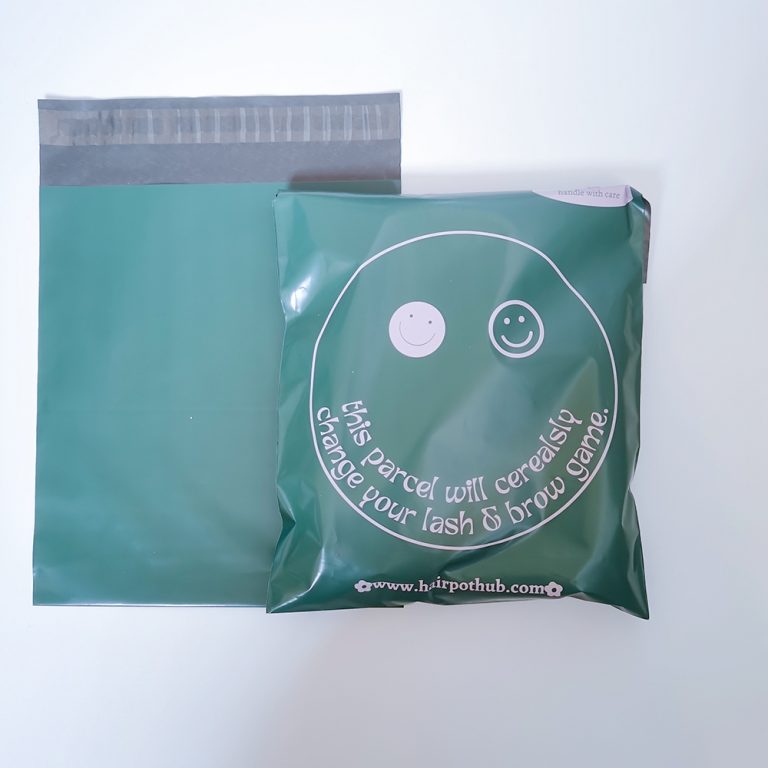
Problem statement: why packaging choice matters now
Brands face a clear operational problem: the same custom poly mailer that showcases your logo and reduces shipping costs can perform very differently for lightweight apparel versus fragile items that need protection. Pressure from rising online volume after the 2020 pandemic-driven surge and stricter carrier handling means a bad packaging decision raises returns, damage claims, and brand risk. For many teams the question is practical — can a printed, tamper-evident or self-seal poly mailer protect goods while preserving presentation and keeping freight affordable? Suppliers that offer options like poly mailers with handles can change the calculus, particularly for apparel-focused operations that need both convenience and branding consistency.
Apparel vs. fragile goods: the core differences
Apparel shipping prioritizes presentation, lightweight protection, and low dimensional weight fees. Apparel benefits from slim poly mailers, clean print registration for logos, and sometimes a gusset for folded garments — these are often sold as apparel bags for shipping that speed packing on a flat-fold line. Fragile goods demand an entirely different profile: cushioning, puncture resistance, and a higher tear threshold. Bubble-lined poly mailers or poly mailers combined with internal padding, different wall thickness, and stronger seals are typical choices. The trade-off is between cost, weight, and liability exposure during transit.
Technical specifications to request from suppliers
Ask your vendor for measurable specs rather than vague assurances. Key items include material composition (LDPE vs. blended films), thickness (microns or mils), tensile strength, puncture resistance, and recommended maximum item weight. Clarify closure type (self-seal or tamper-evident), available print methods (flexographic vs. rotogravure) and acceptable color tolerances for logo reproduction. Define MOQ and lead times, and request sample runs to verify print registration and fit for your fulfillment equipment. These specs reduce surprises on the packing line and downstream returns.
Cost, sustainability, and fulfillment compatibility
Unit cost is visible; landed cost is not. You must model total cost as: unit price + packaging weight effect on shipping rates + returns and rework. Sustainable materials or recycled films may carry higher unit prices but can lower brand risk and meet retailer compliance. Check with your fulfillment partners — some 3PLs and carriers specify packaging for liability reasons. If you intend to use devices such as integrated handles or reinforced seals, ensure the supplier’s tooling and MOQ will fit your launch cadence.
Common mistakes and how to avoid them
Teams often conflate marketing and protection requirements. They design for a pristine unboxing experience but skimp on puncture resistance — and then see an increase in damage claims. Another frequent error is ignoring print registration variance; a logo that looks crisp on a prototype may misalign at production scale. Finally, many underestimate MOQ impact: custom colors and complex laminations raise tooling costs and minimums. Test early with pilot SKUs and include functional tests that mimic carrier conditions — drop, compression, and abrasion. —
Supplier selection checklist
Use a short, actionable checklist when vetting vendors:
- Request certified material data sheets and test reports (tensile and puncture ratings).
- Validate print proofs and registration tolerances with production samples.
- Confirm MOQ, lead time, and contingency capacity for peak seasons like holiday spikes.
- Check compatibility with your fulfillment equipment and carrier rules (dimensional weight impact).
- Ask about post-sale support: returns handling, rework policies, and damage credits.
Advisory: three critical evaluation metrics (golden rules)
1) Protection-to-weight ratio — measure how much protection each additional gram of packaging buys you; prioritize packaging that minimizes weight without sacrificing puncture resistance. 2) Total landed cost per order — include packaging, incremental shipping fees due to dimensional/actual weight, returns, and rework when comparing options. 3) Fulfillment and carrier compatibility score — confirm that the chosen poly mailer (seal type, thickness, print placement) meets your 3PL and carrier requirements to avoid additional handling fees or rejections.
Choosing the right custom poly mailer is both a logistics decision and a brand decision; it pays to quantify protection, cost, and operational fit. For teams balancing presentation and protection at scale, experienced suppliers with flexible SKUs and reliable lead times streamline that trade-off — and that practical value is precisely what WH Packing brings to complex apparel and fragile-goods operations.
– practical, proven, and ready.
