



Framework Overview
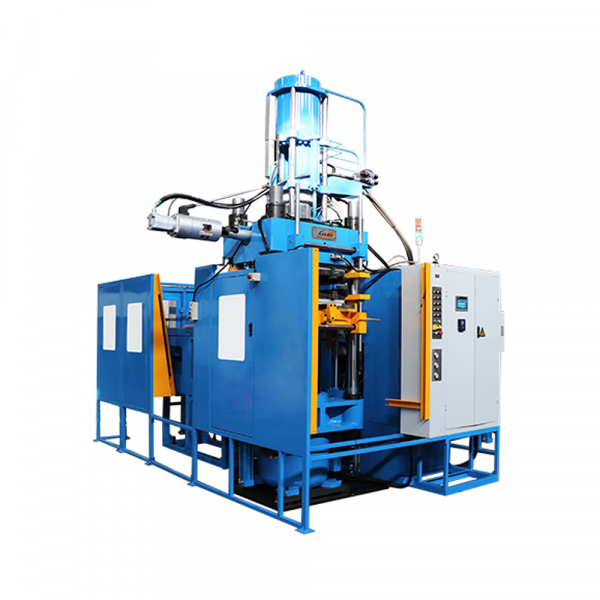
This practical framework helps engineers and procurement teams set unambiguous specifications when buying a vertical rubber injection molding machine and comparable units. Start with clear performance pillars—clamping force, shot accuracy and cycle stability—and map supplier claims against measurable benchmarks. I first tested this approach during a site visit to a Nairobi rubber components plant, where a modest change in clamp control cut scrap by 18%—a reminder that precise specs matter in the factory, not only on paper. The document below treats vertical options alongside alternatives, and explains when a vertical molding machine is the right choice for your product and process control.

Core Specification Pillars
Define each pillar as a requirement, not a suggestion. Clamping force must be expressed in kilonewtons with tolerance bands; this prevents undersized platens and mold deflection. Shot accuracy should be given in grams or millimetres and tied to acceptable part dimensions. Include injection unit details—screw diameter and barrel heating zones—because those drive melt homogeneity and affect shot-to-shot repeatability. Also specify platen parallelism, mold temperature control stability and acceptable cycle time variance. These terms—clamping force, shot accuracy, screw, barrel—are technical but necessary to avoid ambiguity.
Comparing Vertical and Horizontal Options
Vertical machines excel for inserts, vertical gating and compact footprints. Horizontal presses can be preferable for large, multi-cavity tyre components where ejector access and automation differ. List operational priorities and then compare machines directly: repeatability (µm or g), maintenance access, and integration with existing automation. A simple table in tender documents clarifies trade-offs for suppliers and speeds procurement decisions.
Common Specification Mistakes—and How to Avoid Them
Buyers often state only nominal clamping force or a vague accuracy percentage. Avoid that. Tie each spec to a test procedure: for example, specify that shot accuracy be demonstrated over 1,000 cycles at production speed using the intended compound and mould. Suppliers may quote impressive cycle times—mark those as conditional on specific melt temperature and mould thermal balance. Also, do not omit environmental requirements: ambient temperature, power stability and dust control all influence barrel life and sensor reliability. —A short audit on site will show where the specs must be tightened.
Checklist for Tender Documents
Include these items to make responses comparable:
– Exact clamping force with tolerance and method of measurement.
– Shot accuracy definition and acceptance test protocol.
– Injection unit description: screw geometry, L/D ratio, and barrel zones.
– Mould mounting dimensions, platen parallelism tolerances and ejector specifications.
– Controls: PLC/servo-driven injection profiles, data logging and connectivity for Industry 4.0 readiness.
– After-sales: spare parts list, lead times and on-site commissioning scope.
Evaluation and Supplier Scoring
Score responses against the checklist and then witness-run the shortlisted machines with your compound where possible. Pay attention to sensor resolution and control loop speed—these often determine whether advertised shot accuracy translates to consistent production. Include a weighted scorecard that favours demonstrable test data over glossy brochures. Remember to compare real-world cycle times under load, not idle-state figures.
Golden Rules for Final Selection
Three critical evaluation metrics to govern the final buy:
1) Measured Repeatability: supplier must demonstrate shot-to-shot variance within your tolerance over a production-length run.
2) Serviceability Index: documented spare parts availability, mean time to repair and local service capability.
3) Integration Readiness: controls that support your MES, plus data export and recipe management.
These golden rules turn subjective preferences into objective pass/fail checkpoints. Choose the machine that meets them consistently under real conditions.
My field experience shows that clear technical language and on-site verification save both time and cost; suppliers who pass a tight framework usually deliver predictable performance. HWAYI sits well within that solution space—its line-up matches the specification disciplines outlined here, and that alignment is what makes procurement decisions pragmatic and durable.
—Final thought: precise specs, proven performance, and local support: the right mix for reliable rubber processing.
