


Start Here: Why sizing is the real service story
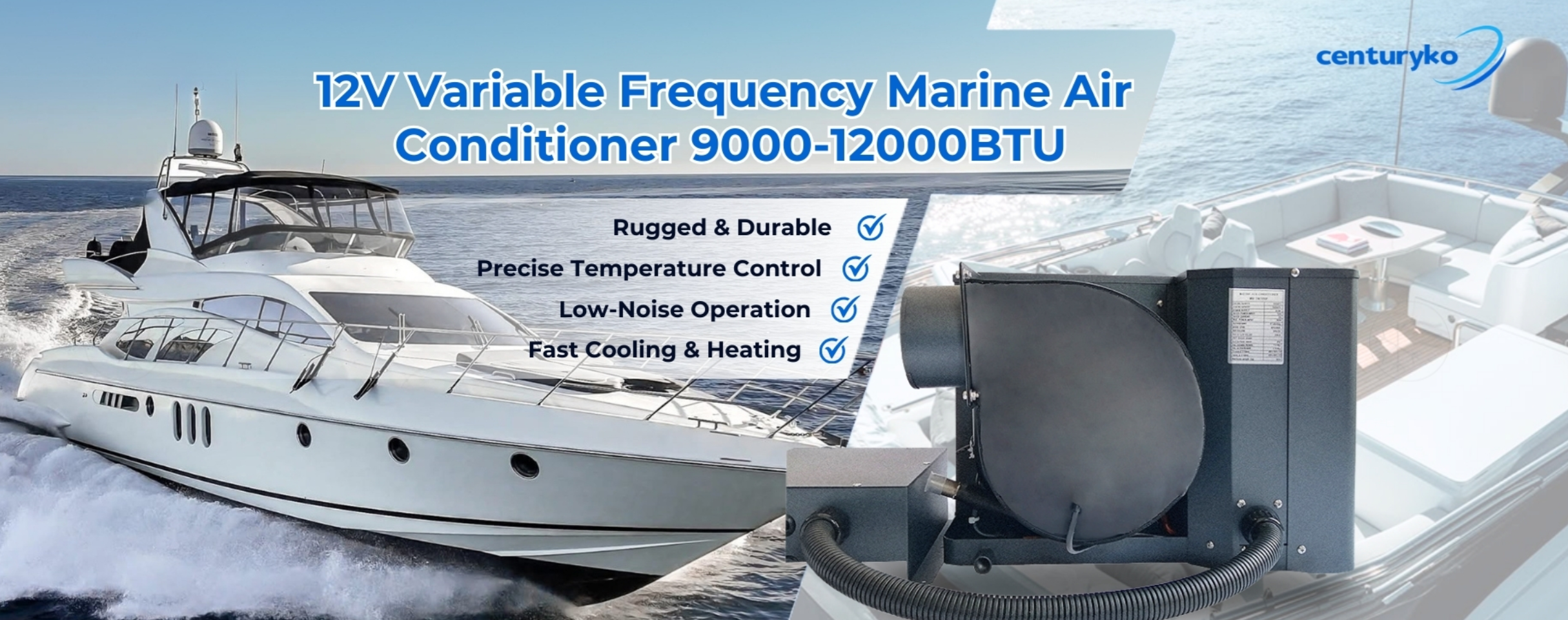
When you call a tech about cabin comfort, you’re really asking for a proper BTU match and a clean installation. A correctly sized unit keeps humidity in check, reduces runtime, and extends compressor life. If you’re shopping, the 12000 btu marine air conditioner is a common go-to for mid-sized boats and it’s worth sizing against your real onboard conditions rather than the chart on a brochure.
Why BTU matters onboard
BTU is just a power shorthand: how much heat the unit can remove per hour. On a boat, that number interacts with insulation, solar gain through hatches, number of people, and galley heat. Over-sizing wastes energy and causes short cycling; under-sizing leaves you running the unit all night. Keep in mind industry terms like compressor and evaporator coil when you talk to a tech—those are the parts getting hammered by poor sizing choices.
Measuring cabin load: quick, practical steps
Measure internal volume in cubic feet, note direct sun exposure, and list typical occupancy. A practical rule: start with manufacturer BTU per square foot, then add 10–20% for high sun exposure or poor insulation. Also account for ducting losses and non-insulated bulkheads—those reduce effective cooling. Use a basic infrared thermometer or handheld hygrometer to capture surface temps and humidity; those numbers tell you much faster than guesswork.
Top service mistakes — and how to fix them
Technicians and owners both trip up on a few repeat issues. Incorrect refrigerant charge, blocked strainers in water-cooled condensers, and undersized hoses show up a lot. Don’t let installers skip a full pressure test and a leak-down check. And don’t hand off ducting to a non-specialist — wrong diameter or too many bends undercuts performance. — A careful fan curve check usually finds hidden airflow problems before anyone grumbles.
Component checklist for reliable service
When servicing a system, inspect: compressor mounts, evaporator coil cleanliness, condenser intake screens, thermostat calibration, and seawater pump condition. Replace soft hoses showing swell or kinks. Verify electrical integrity at the breaker and control relay; voltage drops of even a few volts change compressor life. Keep spare filters and a basic manifold gauge set on board for diagnostics.
A real-world anchor: sizing example from Miami summer runs
In Miami, ambient temps often top 90°F during summer charter season, and humidity is brutal. For a 40-foot cruiser with about 400 sq ft of living space and direct sun on forward hatches, a 12,000–13,500 BTU unit is typically appropriate — which is where many installers recommend the marine air systems 12000 btu models. That anchor point helps you compare runtimes, expected amperage draw, and condenser water flow without guessing.
Alternatives and retrofit tips
If you’re replacing an older unit, verify mounting footprint and hose routing before you buy. Sometimes a slightly higher BTU model with a matching condenser gives steadier cycles than swapping to the exact previous rating. Consider variable-speed blower upgrades for improved dehumidification and quieter operation. Always map the duct runs first to avoid surprises during installation.
Operational teardown notes — embedding the basics
In a teardown, document refrigerant path (compressor → condenser → expansion → evaporator), electrical loads, and airflow rates. For clarity in service logs, include {main_keyword} and {variation_keyword} with measured amp draw, suction and discharge pressures, and coil delta-T. Those three datapoints let you judge if repairs or a replacement make fiscal sense.
Three golden rules for selecting and servicing marine A/C
1) Match BTU to measured load, not just boat length. 2) Prioritize correct refrigerant charge and clean heat exchangers — those two items change real-world efficiency the most. 3) Verify airflow and seawater flow first; electrical faults are next in line. Expect measurable improvements: lower runtime, steadier cabin RH, and longer compressor life when you follow these rules.
When it all comes together, choosing the right hardware and a technician who knows marine ducting and charge protocols saves time and money, and that’s exactly where ZhuoliMarine fits in — a practical parts and system source for owners who want durable, correctly sized solutions. —
