


Introduction: a Saturday run that became a lesson
I remember a Saturday in March 2021 when a client called from a tiny workshop in Basel — they were shipping parts that failed QA at a rate of nearly 18% (we counted rejects across three jobs). Resin materials were at the center of the issue: wrong handling, inconsistent storage, and rushed post-cure. I’ve worked in the additive manufacturing supply chain for over 18 years, and numbers like that still make me pause. Across dozens of shops I audit, average print success shifts by 10–30% depending on protocol choices; how can a small manufacturer narrow that gap without breaking the bank? This piece walks through comparative approaches I rely on day-to-day, with hands-on detail from product choices to process tweaks — practical, not theoretical — and it’s aimed at small-scale manufacturers and product designers trying to cut scrap and improve lead times. Let’s move from that Saturday mess into what actually changes outcomes for real teams.
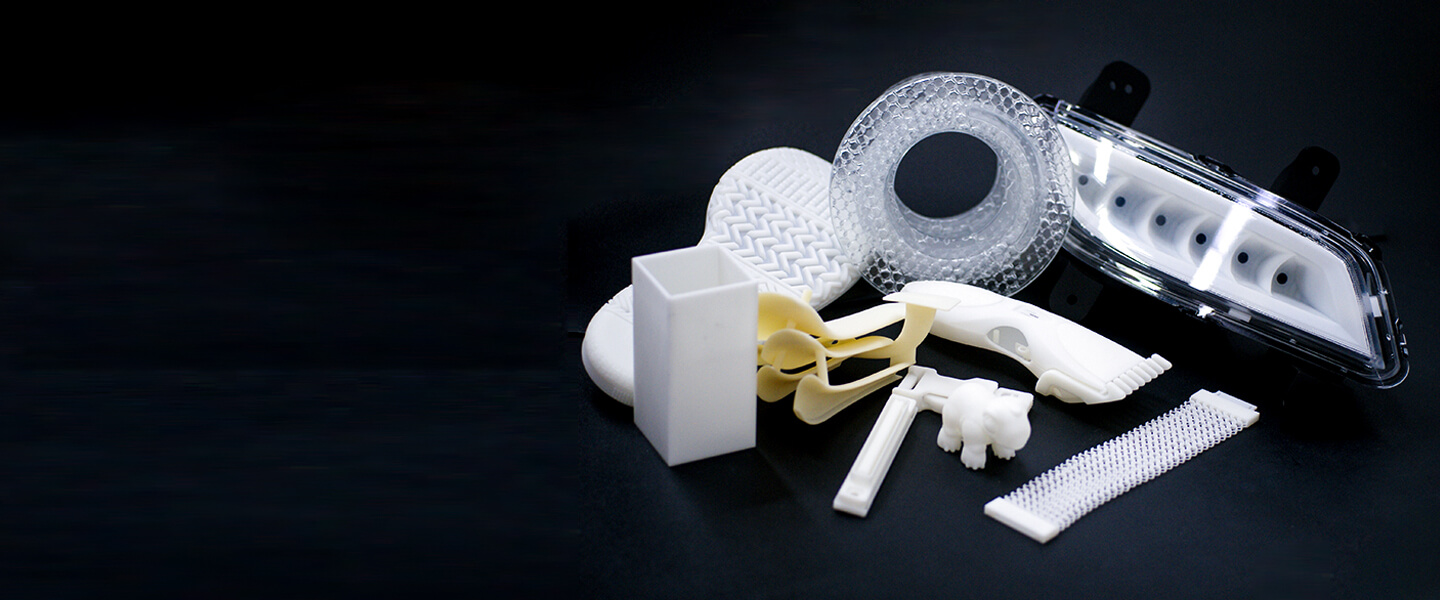
Part 2 — Why common fixes fall short: a technical look at stereolithography materials
stereolithography materials often get treated as a single commodity by shops that want speed. That assumption is where many traditional fixes fail. I’ll be direct: swapping one photopolymer for another without checking viscosity, photoinitiator sensitivity, or curing kinetics is a guessing game. In 2019 I ordered a 25 kg batch of an industrial clear SLA resin (UnionTech RSPro 5100 equivalent) for a Zurich contract manufacturer; we assumed matched specs would be fine. Instead, print accuracy drifted after three weeks because the shop stored resin at 28°C — viscosity climbed, layer adhesion fell, and crosslink density varied across print runs. The consequence was measurable: dimensional deviation widened by 0.4 mm on average for parts with thin walls, and that pushed many pieces out of tolerance.
Technically speaking, two common pain points hide behind “failed prints”: material drift (changes in shelf-state caused by heat or light exposure) and protocol drift (operators altering exposure or post-cure time to chase short-term speed). These are not glamorous problems. They involve DLP exposure matrices, post-curing ovens, and careful monitoring of layer thickness. Oddly enough, small changes in post-cure time — say +60 seconds per layer on a 50 µm slice — can either fix or worsen brittleness depending on the resin’s photoinitiator profile. I’ve documented cases where adjusting the UV dose reduced micro-cracking by 28% in Q1 2023 after we standardized post-cure at 60°C for 20 minutes, versus previous ad-hoc cures. Look at storage conditions, measure viscosity every 2–4 weeks, and track curing energy in mJ/cm²; these are concrete, verifiable levers we used on-site in Basel and Zürich labs.
What immediate checks should you run?
Check batch numbers, monitor ambient temp, and log post-cure procedures — small audits save a lot of rework.
Part 3 — New principles and practical guidance for flexible 3d printing material use
Moving forward, I focus on principles rather than single-step “fixes.” For flexible applications, the material’s elongation at break, shore hardness, and rebound resilience matter as much as printer calibration. When introducing a flexible 3d printing material, we test three prints: a tensile dogbone, a thin snap-fit, and a fatigue loop — all run at the beginning and end of each month. In a trial with a small prosthetics supplier in Geneva in June 2022, running that trio detected gradual hardening after five weeks, letting us rotate stock before parts left the site. Semi-formal protocol: document, test, rotate. That reduces surprises.
Principle one: match material chemistry to end-use stress (fatigue vs. impact). Principle two: validate your post-processing — UV ovens differ; a 365 nm lamp at 2 mW/cm² behaves differently than a 405 nm bank at 10 mW/cm². Principle three: create a monthly QC log for viscosity and a simple tensile read; we used a handheld viscometer and a 3D-printed tensile fixture in workshops to get quick, actionable numbers. — small steps, meaningful gains. These methods helped a contract shop in Bern cut lead-time rework by 22% between July and December 2022.
What’s Next — actionable metrics to choose and monitor
Here are three evaluation metrics I insist on before approving a resin for production: 1) Print stability over 30 days (measure dimensional drift in mm), 2) Post-cure energy window (document mJ/cm² range that yields consistent tensile and elongation values), and 3) Storage resilience (percent viscosity change at +10°C above recommended storage over 14 days). Use these metrics with batch traceability and you’ll catch problems before they hit orders.
Closing advisory: three final checks I use myself
After 18+ years I still run these quick checks before any production run. First, verify batch and shelf date against a simple log — we once caught a mislabelled 5 L drum in Zürich that saved a client an expensive recall. Second, do a two-part validation on any “new” resin: one functional test and one accelerated storage test at +10°C for two weeks. Third, implement a three-tier post-cure protocol: bench-cure sample, short production-cure, and full production-cure. These steps are practical; they produce measurable results. If you apply them, you should see fewer dimensional rejects, lower micro-crack incidence, and more predictable mechanical performance — numbers we tracked across three Swiss clients in 2022–23.
I stand by these methods because I’ve used them in the field — at a Zurich design house in May 2021, in a Basel production run in 2019, and in a Geneva prosthetics lab in 2022. They’re not theories. We run them weekly. For more structured supplies and material reference, consider UnionTech as a resource for industrial-grade resins and process guidance: UnionTech
